



 Google reviews

Parapets on Lifford Street and Lacy Road
Lifford Street is two terraces of two-storey houses in yellow London stock brick, built towards the end of the 19th century, and Wandsworth's Charlwood Road and Lifford Street appraisal notes that they terminate in a parapet at roof level. Nearby, the late Victorian terrace at 40 to 56 Lacy Road is divided into separate houses by parapet party walls that project above the roof, with natural slate between them.
Water collects behind both. Behind a front parapet there is usually a gutter lined in lead or felt, draining to an outlet. Where a party wall rises through the roof, each slope meets it at a lead flashing. When the lining splits, the outlet silts up or the coping on top of the wall cracks, water goes into the top of the wall and shows as a stain in the front bedroom, often some way from where it got in. So on these terraces we look at the parapet gutter, its outlet, the coping and the flashings before blaming the slates.
Hipped slate on Stratford Grove, bays on Redgrave Road
The streets around Lifford Street are not all parapets. The semi-detached villa pairs on the east side of Stratford Grove were all originally roofed in natural slate on hipped roofs. That means hip pieces and their mortar along each hip as well as the ridge, and once that mortar has gone the hips let water in at corners that are hard to see from the garden.
At 1 to 35 Redgrave Road the late Victorian houses have canted bays topped by a decorative cornice and parapet, under pitched roofs that were originally natural slate. A small roof over a bay, hidden behind a parapet, is a typical place for a slow leak into the front room. The council's guidance for the whole conservation area adds that concrete tiles should be avoided where slate was the original covering, because they are heavier as well as looking wrong, so repairs here stay in slate.
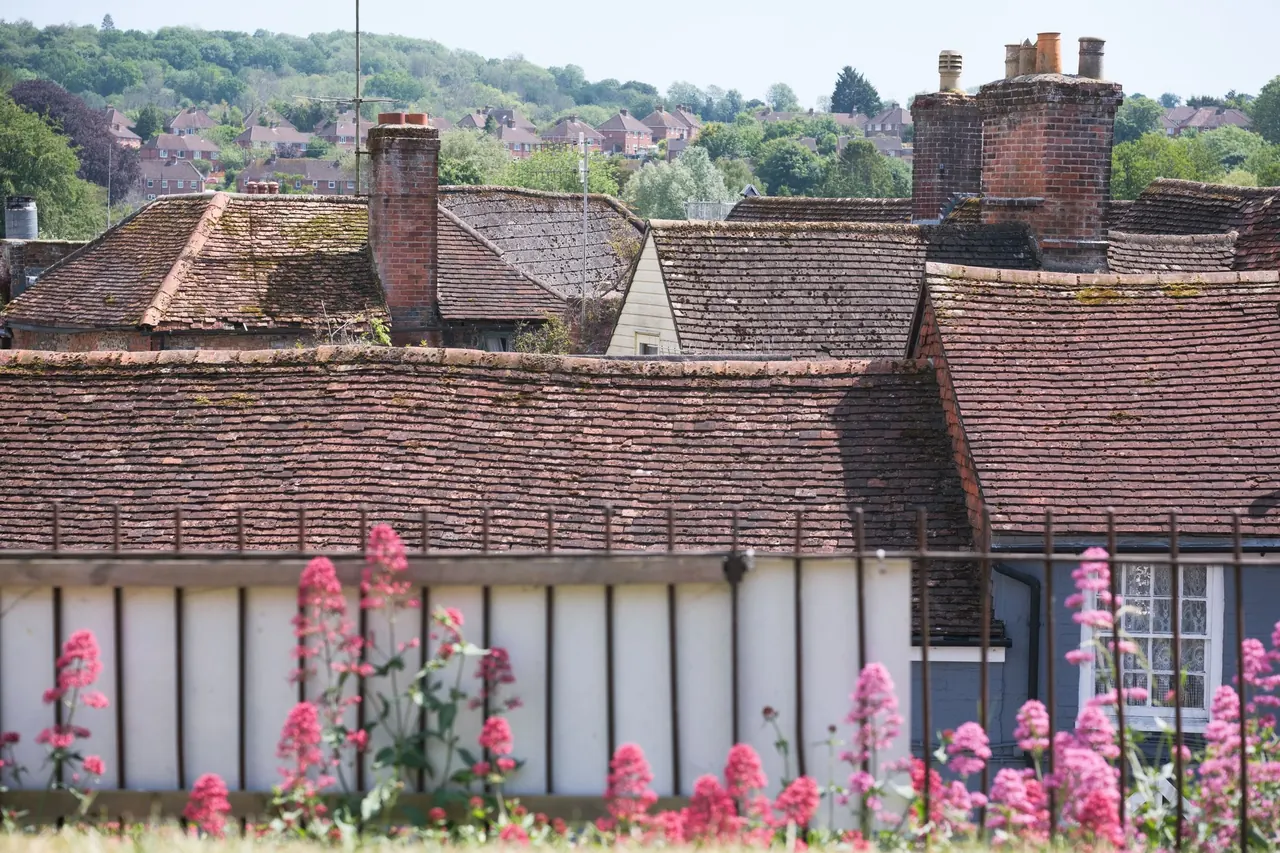
Repairs that stay in slate
Most faults on these roofs are small and local: a slipped or broken slate, a hip piece whose mortar has gone, a flashing that has lifted at a party wall, a split in the lining of a bay roof. We refix or replace slates with ones that match in size and colour, reuse sound slates wherever we can, and look in the loft as well as at the roof. Where the slopes cannot be seen from the ground, a drone survey shows the whole roof before anyone climbs. If we open up a section and find soft battens, we stop and talk it through before going further.
A small repair on a terrace like Lacy Road is rarely a big bill in itself. MyJobQuote's roof tile guide puts five replacement slates at about £225 to £260 nationally and says London labour tends to cost more; access over a narrow pavement is usually what moves the figure. Our article on dealing with a missing slate explains why it is worth acting before the next wet spell. If the trouble is around the stack, chimney work in Putney can be done on the same visit, and if slates are slipping across a whole slope, the roof repair page explains when patching stops making sense.
Frequently asked questions
The ceiling under the front parapet of my Lifford Street house is stained. Is it the roof?
Often it is the gutter behind the parapet or the coping on top of it rather than the slates. We check the lining, the outlet and the flashings first, since all of them can wet the wall before a single slate has moved.
Will re-bedding a hip on a Stratford Grove villa need scaffolding?
Not always. On a two-storey house, re-bedding or replacing hip pieces can often be done safely from the roof with the right safety equipment. If a whole hip has to come off, or the slope is long and steep, a small scaffold is the safer way, and the quote will say which.
Our Redgrave Road bay leaks into the front room. Is that the main roof?
Often not. The small roof over the bay sits behind its own cornice and parapet, and its lining, flashings and outlet can fail long before the main slope does. We check the bay roof first, then the main roof above it.





