



 Google reviews

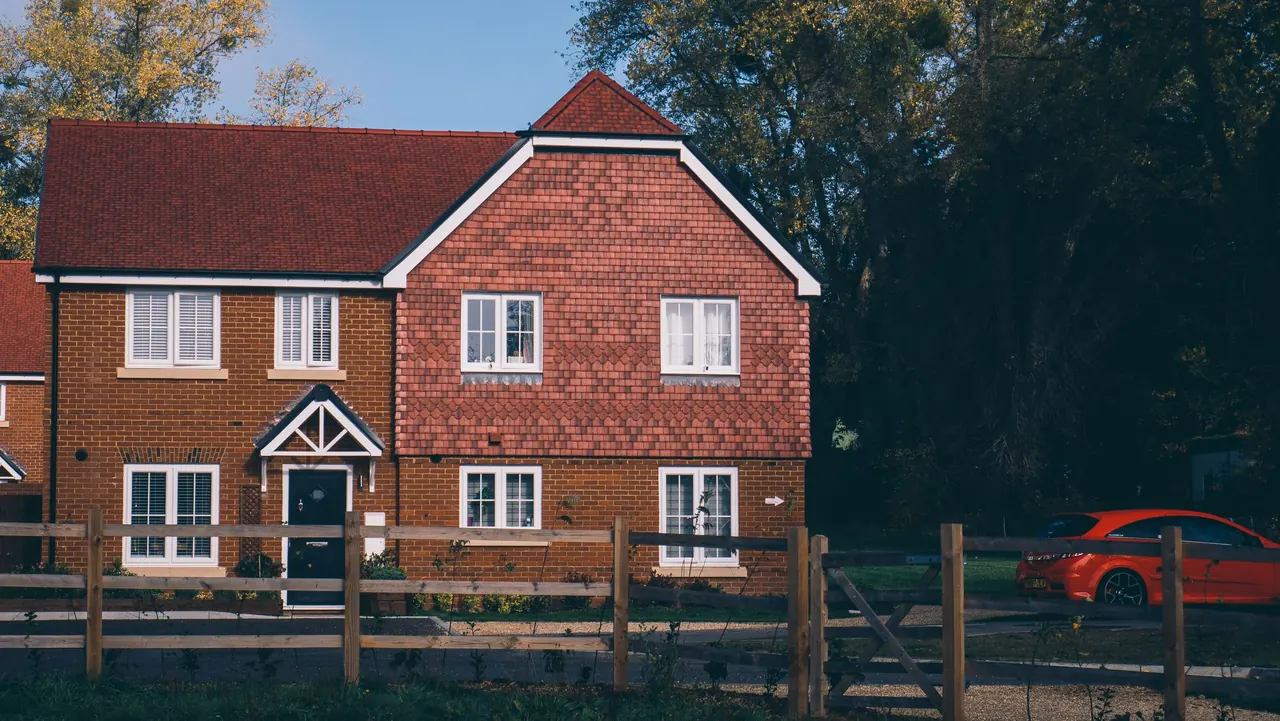
Dover House eaves with no fascia board
Most roofline work in London means taking down a rotten timber fascia and putting up a new one, often in uPVC. On the Dover House Estate that approach can spoil the house. Wandsworth Council's Dover House Estate appraisal describes a prominent projection at the eaves with no visible fascia as a notable feature of all the roofs, and notes that the gables have no bargeboards. The cottages were built between 1920 and 1927 in groups designed to be seen as one building, and the estate has had an Article 4 Direction since 1991.
So what rots on these cottages is not a board but the eaves itself: the rafter feet, the timber that carries the gutter brackets and the soffit lining underneath. Years of an overflowing gutter or a failed joint dripping onto it are usually the cause. The repair is to the eaves timber itself. We take the gutter down, repair the rafter ends where they have rotted, renew the soffit lining where needed and refit the gutter on sound timber, keeping the same depth of overhang.
Boxing the eaves in with a deep plastic fascia, or adding bargeboards to the gables, would make one cottage look different from the rest of its group. We recommend checking with the council before any change to how the eaves look, and we keep to the gutter colour and profile your neighbours have.
Village villas and Medfield Street
In Roehampton Village the roofline is a mixture. According to the council's village appraisal, the Ponsonby Road and Treville Street villas are mostly stock brick, while Medfield Street mixes stock brick terraces with a red brick Gothic double terrace. Painted timber fascias on houses of this age often rot from behind, where the gutter has leaked against them for years while the front still looks fine under paint.
On a period house, the board that goes back should keep the depth and line of the original. On 15 to 85 Medfield Street, the Article 4 Direction brings external alterations visible from the street under planning control, so ask the council before swapping painted timber for uPVC on the front. At the back, with more freedom, uPVC can make sense.
Rear eaves get looked at far less than the front, because most owners only see them from the garden. When the front boards are being done and the access is already up, it is the cheapest time to check the back as well.
Alton Estate rooflines
The 1950s Alton terraces were designed with plain, simple edges under shallow pitched roofs. Here a replacement in uPVC is usually straightforward. Boards come in white, black, grey and woodgrain, and ventilated soffits help air move through the roof space where there is little other eaves ventilation. The appraisal asks that repairs match the original fabric, so on houses it treats as positive we keep the colour and depth close to what was there.
Capping, or overboarding, puts a thin uPVC cover over existing timber. It only works if the timber underneath is completely sound. Over rot, it hides the problem until the gutter brackets pull out. We check the timber before suggesting it.
Since the gutters come down for roofline work, it is the natural time for new guttering in Roehampton, and keeping it clear with regular gutter cleaning stops the new boards being soaked. If an overflow caused the rot, clearing the blockage comes first. As a national guide, Checkatrade lists replacing fascias and soffits at £90 to £170 per linear metre.
Frequently asked questions
Can I fit uPVC fascias to my Dover House cottage?
The estate's eaves were designed with no visible fascia, and the council's appraisal treats that as a notable feature. Adding boards would change the look of your house against the rest of the group. Repairing the eaves timber to keep the original line is the better approach, and the council can confirm what it will accept.
There are no bargeboards on my Dover House gable. Should there be?
No. The appraisal records that the estate's gables were built without them. If the verge is letting water in, the repair is to the verge itself, not a new board over it.
The timber fascia on my Ponsonby Road villa is soft at one end. Does the whole board need replacing?
Usually the whole length, because rot that shows at one end has often spread along the back of the board where it meets the gutter brackets. We check the rafter ends behind it at the same time, since they are often what the water reached next.





