



 Google reviews

White bargeboards on Winthorpe Road
Winthorpe Road, in the Oxford Road Conservation Area north of Upper Richmond Road, was built in the late Victorian burst of building that the council dates to about 1876 to 1884 across the Oxford Road area. The council's appraisal describes it as three-storey gable-fronted Victorian houses in gault brick, arranged in pairs, with canted bays, porches on Corinthian columns and incised scrollwork, and it notes that decorative bargeboards add to the visual interest. One of its photographs is captioned simply "impressive white bargeboards".
A front gable three storeys up takes the weather full on. Rain runs down the face of the bargeboard, sits in the joints of any fretwork, and gets behind the paint where it has cracked. The apex and the feet of the boards, where the end grain is exposed, go first. Once the timber is wet and the paint has failed, it can rot from the back while the front still looks presentable from the pavement.
We look closely before anyone decides on replacement. Close-up photos of the gable show whether the problem is a few soft ends and a failed joint, which can be cut out and repaired in timber and repainted, or rot right through the board.
Winthorpe Road is not the only street where the roofline is part of the design. In the Rusholme Road Conservation Area, the appraisal notes painted white timber fretwork on porches and balconies across the estate, particularly on the terrace in Putney Heath Lane, with some houses also carrying decorative bargeboards. On southern Keswick Road, the locally listed pair at 23 and 25 has distinctive pebbledashed coving to the eaves, with mock pargetting surviving at No. 23. The Grade II listed house at 25 Oakhill Road has a barge-boarded half-hipped gable.
Fascias and soffits on the blocks and back additions
Away from the decorative fronts, the villas have plainer fascias and soffits on their rear elevations and back additions, and so do the post-war blocks on Keswick Road. The usual signs are a gutter bracket pulling out of a soft board, a soffit sagging between the rafter ends, or paint flaking off a board that has gone grey and spongy underneath. Water from an overflowing gutter is often what rotted it in the first place.
On these plainer parts of the house, the job is straightforward. Rotten timber comes off, the rafter ends are checked, and new fascias, soffits and bargeboards go on. In uPVC, the finishes include white, black, grey and woodgrain, and ventilated soffits help the roof space breathe.
As a national guide, the Checkatrade fascia and soffit guide gives £90 to £170 per linear metre for replacement. Gables add length quickly, and height adds access, so a gable-fronted three-storey house will sit well above a plain two-storey one. Our main fascias and soffits page covers the options in more depth.
Painted timber or uPVC on a conservation-area gable
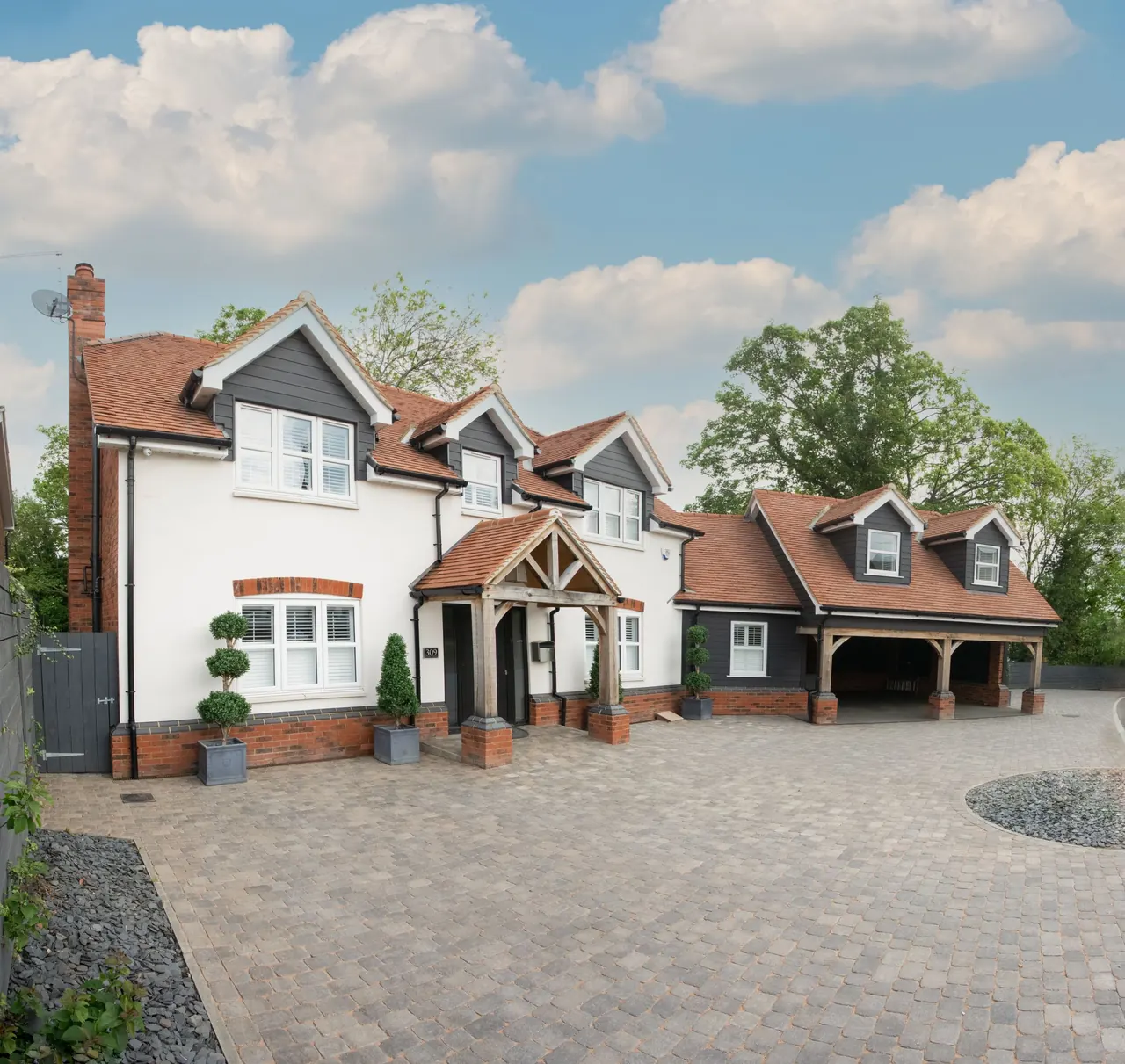
The East Putney appraisal lists the loss of traditional details among the things that have harmed the area's character. On a decorative front gable, swapping painted timber for plain uPVC changes the look of the house more than most people expect. Where the original boards can be repaired, we repair them. Where they cannot, we talk through the options with you before anything comes down, and you decide.
Because the gutters hang from the fascias, it often makes sense to do both at once, while the access is in place. See gutter installation in East Putney for the guttering side. If you would like the whole roofline looked at first, a roof inspection covers fascias, soffits and bargeboards as well as the roof.
Frequently asked questions
Our Keswick Road villa is split into flats. Who pays for new fascias?
Usually the cost is shared under the lease, because the roofline is part of the building's structure, and the freeholder or managing agent arranges the work. Any owner can ask us to look, and we send the photos and quote to whoever runs the building.
Can I fit uPVC fascias on my Keswick Road house in the conservation area?
On a house there is no Article 4 direction here, so it does not usually need permission. On the front of a period house, though, the council's guidance favours keeping original details, and one option is painted timber on the front and uPVC at the back. On a flat, check with the council first.
Can you work on the half-hipped gable at 25 Oakhill Road?
Yes, but it is Grade II listed, so the owner should agree the work with Wandsworth Council first, as listed building consent may be needed. A like-for-like timber repair is the usual approach on a listed house.





