



 Google reviews

Seven horse chestnuts and a lime on the Rusholme Road green
The triangle of grass between Rusholme Road, Dromore Road and Holmbush Road is the centre of the old Clock House Estate. The council's Rusholme Road appraisal calls it the focal point of the whole conservation area and counts eight large trees on it: seven horse chestnuts and one lime.
Horse chestnut leaves are big, with five or seven leaflets on each stalk, and they fall in a short burst in autumn. In a gutter they mat together into a wet layer that water runs over rather than through. The spiny conker cases land first, earlier in the autumn, and they are just the right size to jam a gutter outlet or the top of a downpipe. The houses facing the green, on all three roads, take the most, and the wind carries leaves further along the streets.
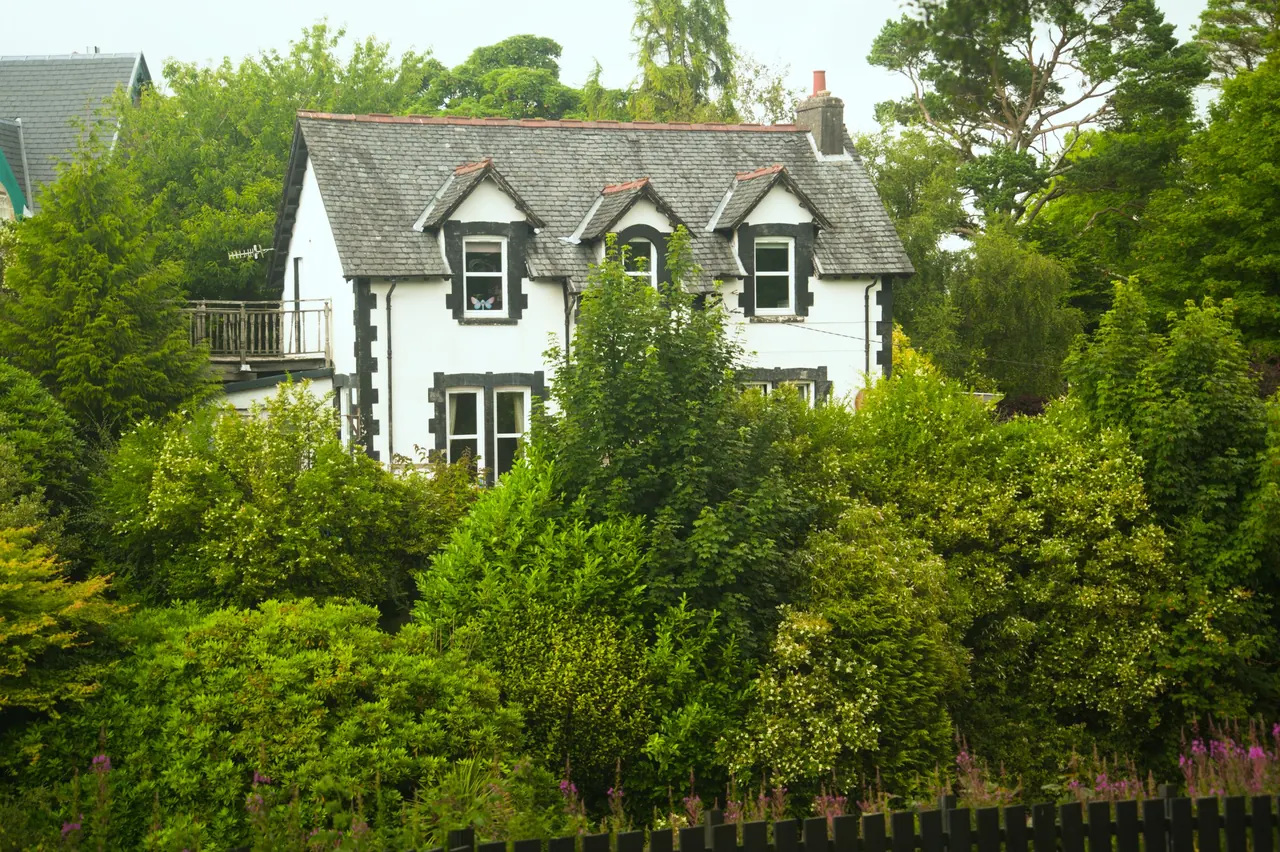
The roofs make it worse. Tuckett's houses south and east of the green have Dutch gables, and the Parnell houses on Holmbush Road have hipped roofs, so there are valleys and short runs where leaves collect behind each gable. A gutter can look clear from the pavement while the valley above it is packed.
Lime trees along southern Keswick Road
The East Putney appraisal shows lime trees in the front gardens of southern Keswick Road. Limes drop small leaves and winged seeds through late summer and autumn. They also attract aphids, which leave a sticky honeydew on everything under the tree, gutters included. That sticky film holds dust and seeds in place, and a gutter under a lime can silt up with a dark sludge that a quick scoop does not shift. Once a year is usually enough, timed for after the leaves are down, with a little longer spent on each run.
Many of these houses have projecting gables and dormers, so the same advice applies: the valleys and the short runs behind each gable need clearing as much as the main gutter along the front.
Why the trees stay and the gutters get cleared
Cutting a tree back is not always an option here. These streets are in the East Putney and Rusholme Road conservation areas, and in a conservation area you must give the council six weeks' notice before most work on a tree, meaning any tree whose trunk is more than 75mm across at 1.5 metres above the ground, as the government guidance explains. Some trees also have Tree Preservation Orders, which need a formal application. The trees on the green are not yours to prune in any case.
So the practical answer is regular clearing timed for the trees. Under the chestnuts, a clean in late autumn once the leaves are down catches the worst of it, and a second visit in spring clears anything the winter storms brought down. Under a lime, one clean a year after leaf fall is usually enough. Our guide on how often to clean gutters covers other situations.
If we spot a cracked joint, a loose bracket or a sagging length, we show you a photo and you can have it put right through our gutter repairs in East Putney. Our main gutter cleaning page has more on what affects the price.
Frequently asked questions
Our house faces the Rusholme Road green. Is one clean in late autumn enough?
For most houses facing the chestnuts, a clean once the leaves are down and a second visit in spring is the safer pattern, because the winter storms bring more down. Further along the street, one clean a year is often enough.
The lime in front of my Keswick Road house drips sticky sap. Does that affect the gutters?
Yes. The honeydew from aphids on the lime glues seeds and dust together, so the gutter silts up faster than leaves alone would suggest. Once a year after leaf fall is usually enough, but the clean takes a little longer under a lime.
Our West Hill house is split into flats. Who should book the gutter clean?
Whoever looks after the shared parts, usually the freeholder or managing agent. One visit for the whole house usually works out simpler and cheaper than each owner booking their own stretch, and every owner gets the same photos of anything we find.





