



 Google reviews

Four houses on Lower Ham Road
The oldest houses on the riverside stretch of Lower Ham Road are numbers 102, 104, 108 and 110. The council's Canbury Gardens appraisal dates them to around 1895 and describes them in red brick, planted timber and white render, with steeply pitched tiled roofs, large central chimneys, and white painted timber balconies and bargeboards. Later houses along the road, built in the early 20th century, borrowed the same style.
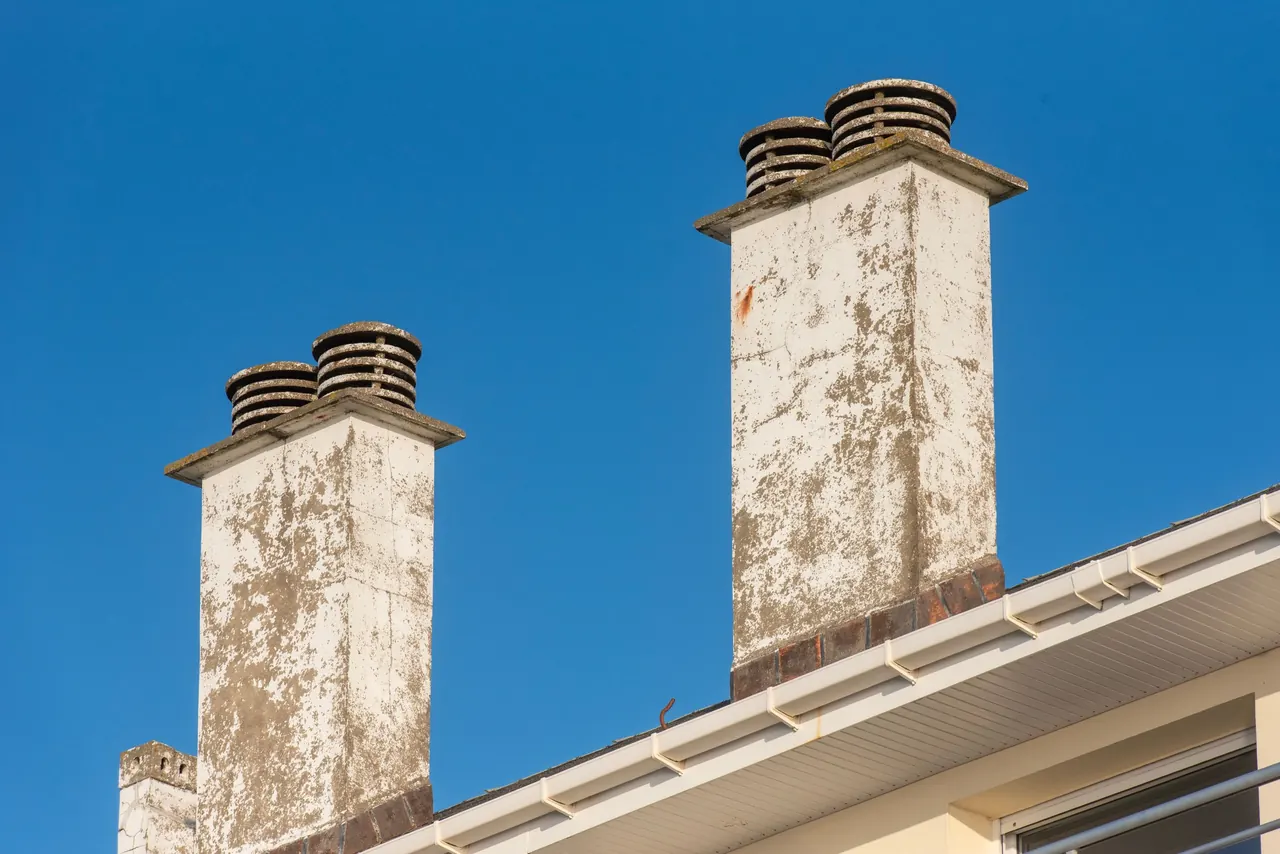
A stack in the middle of a roof is a different animal from one on a gable wall. Water running down the slope above meets it head on, so it needs a lead back gutter on the uphill side, stepped flashings down each cheek and an apron at the front. On a steep pitch that water arrives fast, and the back gutter has to carry all of it round the stack. That is a lot of lead in one place, and every joint in it has to stay tucked into the brickwork.
Leaves behind the stack
Canbury Gardens opened in 1890 with an avenue of London planes, and a chestnut grove lines the barge walk from Kingston Bridge. Plane and chestnut leaves blow onto the roofs nearby and slide down until something stops them, and on these houses the first thing in their way is the back gutter behind the chimney. Leaves packed in there hold water against the lead. Over the years the lead splits along a fold, or its top edge pulls out of the mortar joint, and rain gets behind it.
Inside, the first sign is often a stain on the top-floor ceiling either side of the chimney breast after heavy rain, or damp in the loft on the uphill side of the stack. Clearing the back gutter each autumn, at the same visit as gutter cleaning in Kingston, does more to keep that lead going than anything else.
The northern part of the road is open to the river, so the stacks there also take the wind with little in front of them. The mortar bed round the pots cracks and loosens sooner, and a loose pot on a steep tiled roof has a long way to fall.
Several stacks to a house on Kingston Hill
The council describes the Kingston Hill conservation area as early Victorian to early 20th century large houses in a woodland setting. Houses of that size were built with fires in most rooms, so a single roof can carry three or four stacks, often tall ones rising well above steep slopes and partly hidden by trees. From the drive you might see the front of one of them.
That makes the first job finding out which stack is actually leaking or loose. A drone flight photographs the pots, the mortar bed, the pointing and every side of the flashing on each stack, and a full roof inspection takes in the rest of the roof on the same visit. On a house with several stacks, those photos usually show one or two in worse shape than the others, and the rest can wait.
Party-wall stacks around the Fairfield
In the Victorian streets around the Fairfield and Grove Crescent, stacks are smaller and usually sit on the party wall between two houses, with pots for both. Their faults are slower: pointing washed out on the weather side, a cracked mortar bed round the pots, and old flashings held on with sealant or a cement fillet instead of being tucked into a joint. The council's 1984 report on the Fairfield noted stock brickwork on Caversham Road. Stock brick is soft, and repointing it in hard cement makes the brick wear instead of the mortar, so new pointing should be softer than the brick and let the joints take the weather.
Re-dressing a flashing or resetting a pot on a two-storey house can often be done from roof ladders. Re-leading a big central stack or rebuilding its top courses usually needs a scaffold round it. For a sense of range, MyJobQuote's chimney leadwork guide gives national figures of £150 to £250 for a patch repair and £350 to £460 for full replacement leadwork, before any scaffold. Our main chimney repairs page explains each kind of work.
Frequently asked questions
Why does the back gutter behind a Lower Ham Road chimney keep leaking?
Usually because leaves sit in it and hold water against the lead until it splits or pulls out of its joint. We can renew the back gutter so it is wide enough and falls properly to each side, which helps leaves wash off, but under trees that size it will still want clearing each autumn.
Do all the stacks on a big Kingston Hill house need repairing at once?
Rarely. Photos of each stack usually show one or two in worse shape, often the most exposed. We set out which need work now and which can wait, so the scaffold goes up around the urgent ones only.
Do I need permission to repair a chimney in the Fairfield/Knight's Park conservation area?
Repairs that keep the stack as it is, in matching brick and mortar, are normally just maintenance. Taking a stack down or changing its height or shape in a conservation area is different, so check with the Royal Borough of Kingston upon Thames before planning that kind of work.





