



 Google reviews

Stacks that are part of The Green's design
The Green, The Crescent, the 1920s part of Mount Pleasant Road and parts of Laburnum Grove were the first houses of this part of New Malden, built around 1920 on the hill above the Hogsmill. They are paired, white-rendered semis with steep hipped roofs, tall stacks on the flank walls and substantial stacks on the party walls. On The Green itself the houses switch between single and triple stacks, and the council's study of the area notes that the roofscape is largely intact.
Where a stack is original, it has taken about a century of wind and rain. A tall stack on a steep roof has a lot of brickwork above the tiles, and the lead where it comes through the slope has to cope with water running fast down a steep pitch. Keeping these stacks in good order also keeps the look of one of New Malden's most complete groups of houses.
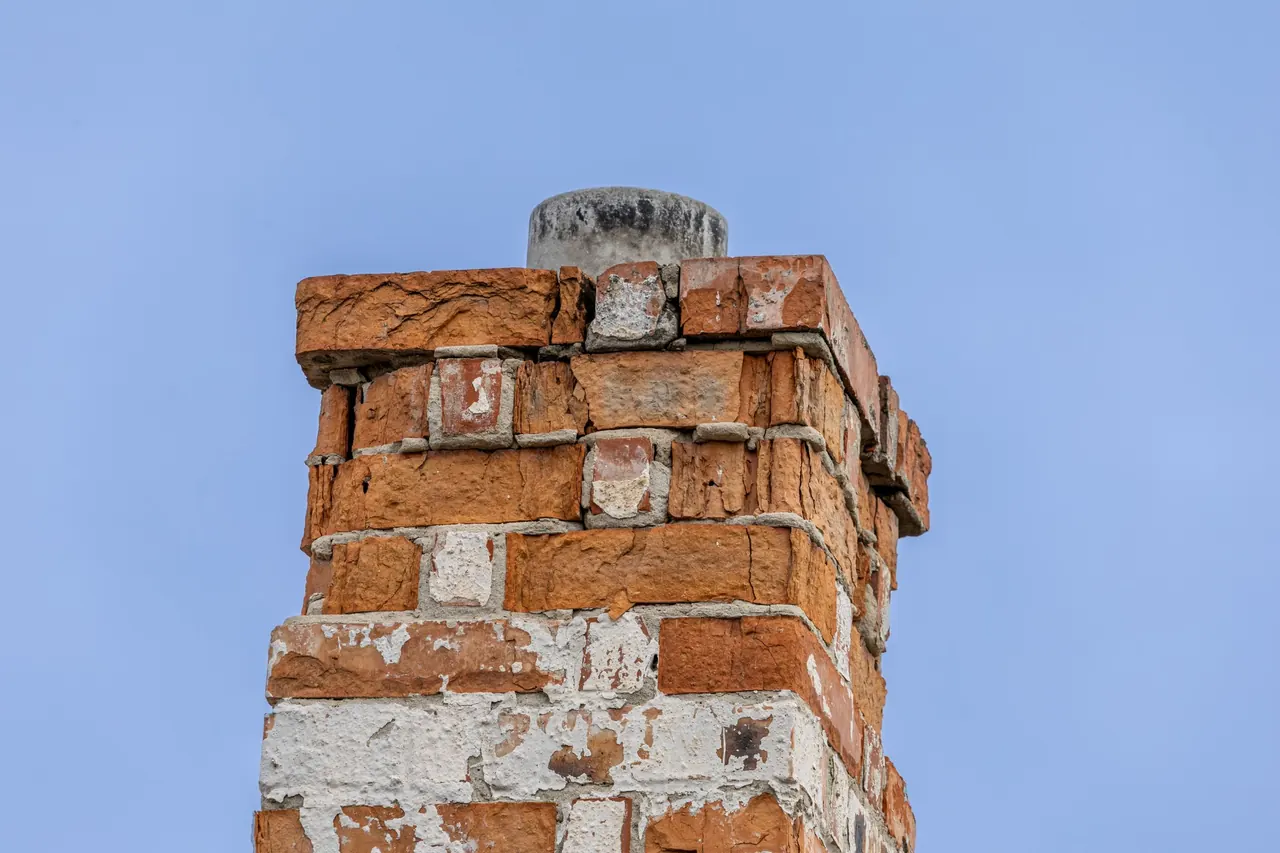
The faults to look for on stacks like these are lifted or split lead on the uphill side, cracked flaunching round the pots, and mortar washed out of the top courses where the stack is most exposed.
Flank stacks and party wall stacks
The two kinds of stack on these houses fail in different ways. A flank stack stands on the end wall, so its brickwork is exposed on three sides and often to the full wind. Repointing and the flashing where it meets the slope are the main jobs.
A party wall stack rises from the middle of the pair and serves both houses. The lead on your side and on next door's side are separate, but the pots, flaunching and top courses are shared, so work at the top is easier and cheaper to arrange with both owners at once.
Where render covers a stack, as it can on white-rendered houses, cracks in it let water into the brick behind. Loose or hollow render is checked along with the pointing.
Arts and Crafts terraces south of the railway
South of the railway, around Franks Avenue, there are short Arts and Crafts terraces with tile-hung dormers and prominent chimneys. On a short terrace a stack often sits close to a tile-hung dormer cheek, and that junction needs lead soakers and a cover flashing that work with both the tile hanging and the brick.
Lead, pointing, flaunching and pots
- Lead flashing: refitting or replacing lead that has lifted, cracked or slipped, including the back gutter on the uphill side.
- Repointing: raking out crumbling mortar and repointing so rain cannot soak into the brickwork.
- Flaunching: renewing the mortar bed round the pots on top.
- Pots and cowls: resetting loose pots and fitting cowls or caps to disused flues, with the right type for any flue still in use.
As a published guide, MyJobQuote's 2026 figures give £150 to £250 for a flashing patch repair and £350 to £460 for full chimney leadwork where no scaffold is needed (MyJobQuote chimney leadwork costs). A tall flank stack on a steep roof usually needs more access than a low central one.
The first step is a New Malden roof inspection by drone, which photographs the top of the stack, the pots and the lead without anyone climbing. If tiles round the stack need work too, a roof repair in New Malden can be done on the same visit. Each chimney job is described on the main chimney repairs page.
Frequently asked questions
Our house on The Green has a triple stack. Is it more work than a single one?
More brickwork and more pots mean more to repoint and flaunch, and the lead has to go round a wider stack. The method is the same. The price is worked out from drone photos of your stack, so you can see exactly what is included.
The render on our Mount Pleasant Road chimney has cracked. Is that a roof problem?
It can become one. Cracked render lets rain into the brickwork, and that damp can reach the flashing and the room below. We check whether the render is still bonded and tell you what it needs, alongside any lead or pointing work.
Our Arts and Crafts terrace near Franks Avenue has a stack right next to a tile-hung dormer. Why does it leak there?
The corner where stack, dormer cheek and main roof meet relies on lead soakers and flashings working together. If one slips, or the tile hanging beside it drops a tile, water gets in at that corner.





