



 Google reviews

Three roofs on one house front
Oxford Crescent, south of Kingston Road, is lined with 1930s semis whose most obvious feature is a dominant tile-hung, hipped-roof bay. Nearby, Bodley Road's larger semis add half-timbered detail and swept gables. Both come from Kingston Council's character study for New Malden South, and both describe houses with a lot going on at roof level.
On a house like that, the main roof is only part of it. The bay has its own small hipped roof, wrapped at the sides in vertical tile hanging. A swept gable brings the roof down in a curve that needs cut tiles and a careful verge. Every one of those features is a joint, a change of angle or a run of mortar.
So a stain on the ceiling above a bay can come from the main slope, from the bay roof where it meets the wall, or from a gap in the tile hanging that lets rain run in behind. Patching where the stain shows often misses the real cause.
Tile hanging from Oxford Crescent to Albemarle Gardens
Tile hanging is a skin of small clay tiles nailed to battens on the face of a bay or gable. It fails one tile at a time: nails rust, tiles crack or drop, and the battens behind are left open to the weather. Being vertical, one missing tile lets in a surprising amount of wind-driven rain.
New Malden has plenty of it. Besides Oxford Crescent, the Edwardian terraces and semis of Graham Road and Albemarle Gardens combine tile hanging with roughcast render, and the 1950s flat-fronted semis on Willow Road are tile hung. Missing tiles are refixed or replaced to match, the battens and fixings round them checked, and the flashing where the tile hanging meets the slope above looked at as well.
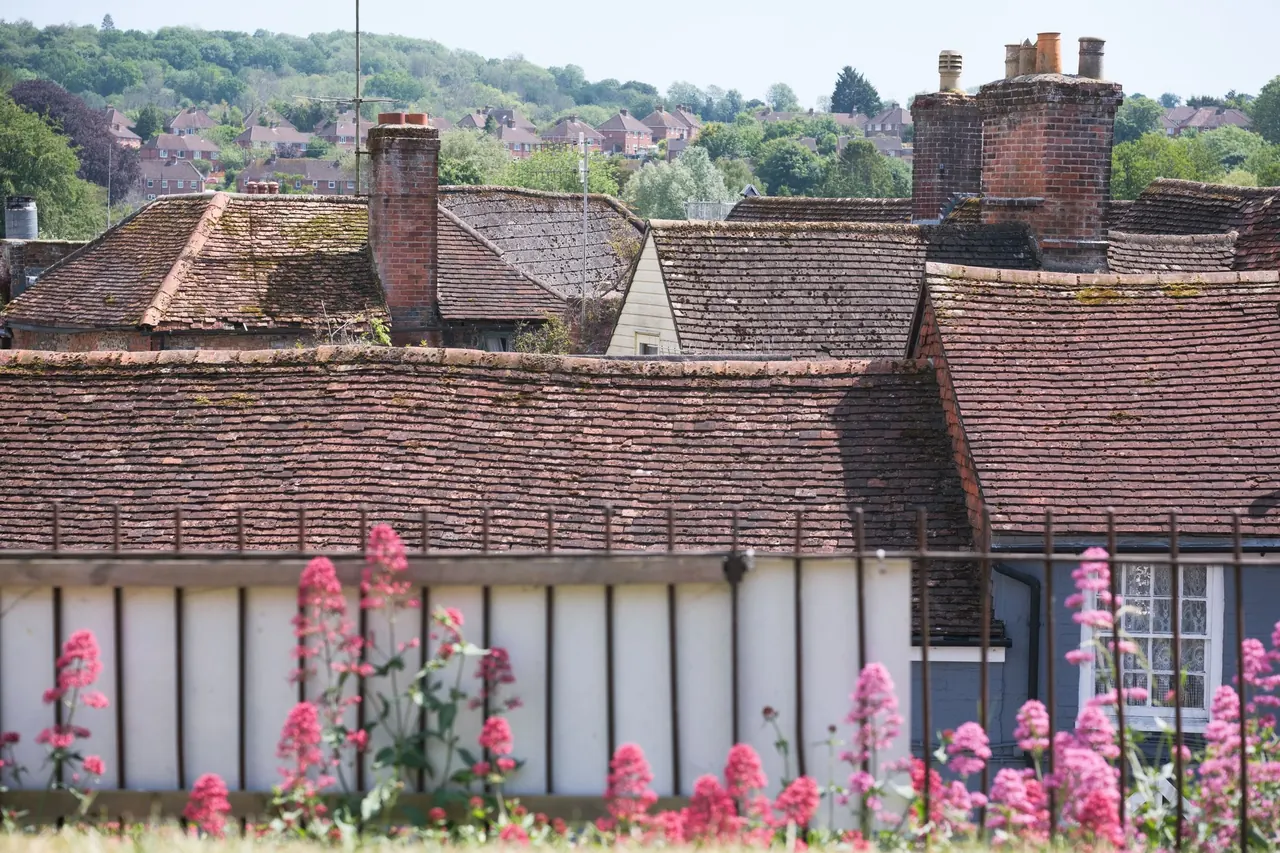
Swept gables and long hips on Bodley Road and South Lane
Bodley Road's swept gables, and the Tudor-detailed swept gables on the 1930s semis of South Lane, have long verges where the tiles finish at the roof edge. Older verges are bedded in mortar. Once it cracks and drops out, the edge tiles loosen and lift in wind. Re-bedding in fresh mortar stops the same problem coming back every winter.
A 1930s semi with a main hip and two bay hips also carries a lot of mortar-bedded hip tiles. What has failed gets repaired, you get photos of it, and any joints nearby that are heading the same way are pointed out rather than quietly left.
Seeing the bay roofs properly
Bay roofs and the backs of swept gables are hard to see from the pavement, so a drone gives close photos without anyone climbing, and where there is a loft hatch the underside gets a look too. You then get a free quote and a straight answer on whether a repair will last or the roof needs more, with a full roof inspection in New Malden available if you want the whole house assessed.
If the trouble turns out to be at a stack, the New Malden chimney repairs page covers it. The wider range of repairs, from valleys to rotten battens, is on the roof repair service page, and if a tile has come down and you need to know what to do until someone arrives, read our missing roof tile guide.
Frequently asked questions
Tiles keep dropping off the tile-hung bay on my Oxford Crescent semi. Can you repair just those?
Yes. The missing tiles are replaced and the ones round them checked, since tiles on the same bay were fixed with the same nails and tend to go one after another. If many nails have rusted, re-fixing a whole face of the bay can be the better answer.
The verge on my swept gable on Bodley Road is losing mortar. Is it urgent?
It is not an emergency, but get it seen before the next spell of strong wind. Loose verge tiles are among the first to lift, and a gap at the verge lets rain reach the gable timbers.
My Graham Road semi has tile hanging as well as roughcast render. Can one slipped tile cause damp inside?
Yes. Rain driven in behind a gap in the tile hanging runs down the battens and can show up on the render below it or on an inside wall. Replacing the tile and checking the flashing at the foot of the tile hanging deals with it.
My Willow Road house is tile hung at the front. Why is there damp behind it?
Most often one or more tiles have slipped or cracked, letting rain run behind the face, or the flashing where the tile hanging meets a window head or roof has failed. A close look at the face shows which.





