



 Google reviews

Streets named after their trees
The Groves were the first part of New Malden to be laid out, west of the High Street, and the council's Groves conservation area page records that Acacia, Chestnut, Lime, Poplar and Sycamore Groves and Elm Road were each planted with trees to match their names. Where a tree stands close to a house, in the street or a front garden, the front gutter takes most of what it drops. Whatever the species, a tree within a few metres of the eaves puts far more into a gutter than leaves blown in from further down the street.
Different trees load gutters in different ways. Broad leaves fall over a few weeks in autumn and pack into a wet mat. Limes and sycamores add flowers, winged seeds and sticky deposits in spring and summer. Seeds and twigs wash down to the outlet and lodge there, which is why a gutter can look clear along its length and still overflow at the downpipe.
Rear wings, bays and the runs nobody sees
A house in The Groves rarely has one simple gutter. Victorian villas often have a rear wing with its own lower roof and gutter, and there may be a lead-lined valley between the wing and the main roof. Bay roofs add short runs of their own. These fill as fast as the main gutter and are easy to forget, so they are cleared as part of the job and water is run through each downpipe to check it flows.
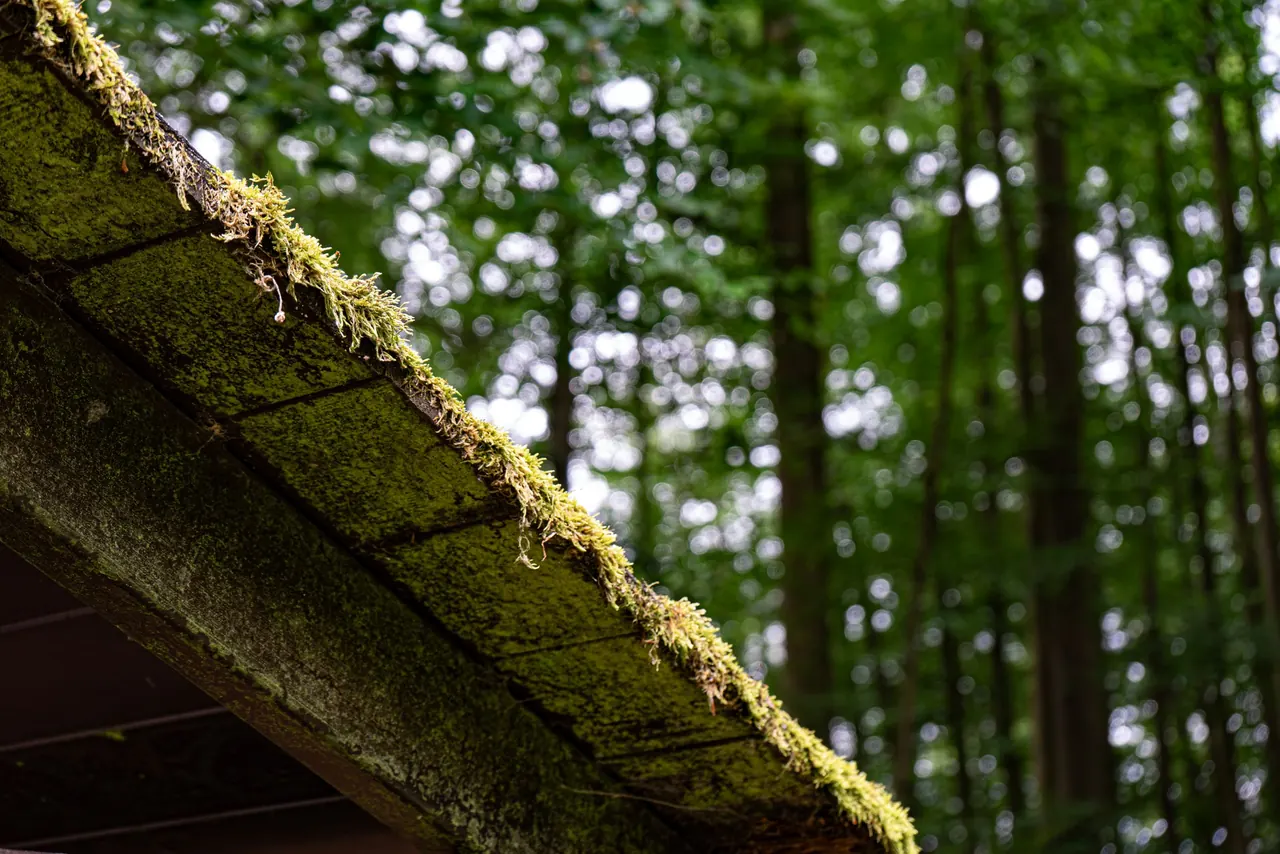
Moss is the other load to watch. On north-facing slopes shaded by big trees, it grows on the tiles, breaks off in clumps and washes straight into the gutter below.
Beverley Park, Dickerage Lane and Clarence Avenue
- Park View and the roads by Beverley Park. East of the High Street, houses on Park View look straight onto the park, and many nearby roads end in views of it. Leaves from the park edge can reach the front roofs.
- Around Dickerage Lane Recreation Ground. North of the railway, the recreation ground is enclosed by mature trees, with house backs close by.
- Clarence Avenue. Grass verges and street trees line much of the avenue, especially towards its western end.
For most houses, a clean once a year after the leaves are down is the minimum. Under the Groves' trees or beside the park, a second clean in spring is safer. A gutter spilling over its front edge in a heavy downpour is due whatever the calendar says. Our article on how often to clean your gutters sets out the reasoning.
If a gutter overflows because of a sag or a broken joint rather than debris, cleaning alone will not fix it, and our blocked gutter repair in New Malden deals with the cause. Gutters left full through winter also soak the boards behind them, which is how a missed clean turns into fascia and soffit work in New Malden. What a visit includes is on the main gutter cleaning page.
Frequently asked questions
There is a lime tree outside my house on Lime Grove. Why are my gutters sticky in summer?
Aphids on lime trees drip sticky honeydew all summer, and the trees also drop flowers and winged seeds. The honeydew binds dust and debris into a paste that settles at the outlets. A clear in spring or early summer stops it building up before the autumn leaves arrive.
My house backs onto Beverley Park. Should the back gutters be cleaned more often than the front?
If the trees are on the park side, yes. The side facing the trees takes most of the leaves, so the back may need clearing when the front is still fine.
Moss from my north-facing Acacia Grove roof keeps filling the gutter. Will a clean sort it?
A clean clears what has washed down, but more will follow while moss is growing on the tiles. If the gutter refills quickly, it is worth having the slope looked at as well.





