



 Google reviews

The half-bay roofs on Linden Crescent and Rowlls Road
A brown ring on the front-room ceiling of a hillside semi in Norbiton naturally points the blame at the main roof. Quite often the water is coming from much lower down. These turn-of-the-century houses have ground-floor half bays, each with its own small roof, often lead or tiles, and a flashing where it meets the front wall under the first-floor window.
That flashing is short, low and easy to forget. When the lead lifts, or the mortar fillet some builders used instead cracks away from the brick, rain running down the front wall gets behind it and soaks into the head of the bay. From inside it looks like a leak from above. We check the bay roofs on every visit to the front of one of these houses, because a small repair there is far cheaper than chasing a leak across the main slope.
Kingston Council's character study describes these streets, around Bonner Hill Road, Linden Crescent and Rowlls Road, as the only part of Norbiton of established high quality: two-storey semis that step down the hill or snake around the curves, with half bays and fluted columns. Dawson Road's Edwardian houses also have ground-floor bays, and the same check applies there.
Clay plain tiles, slate and clay hips on the hill
The study records two coverings on these semis: clay tiles, or slate finished with clay hip tiles. They fail in different ways.
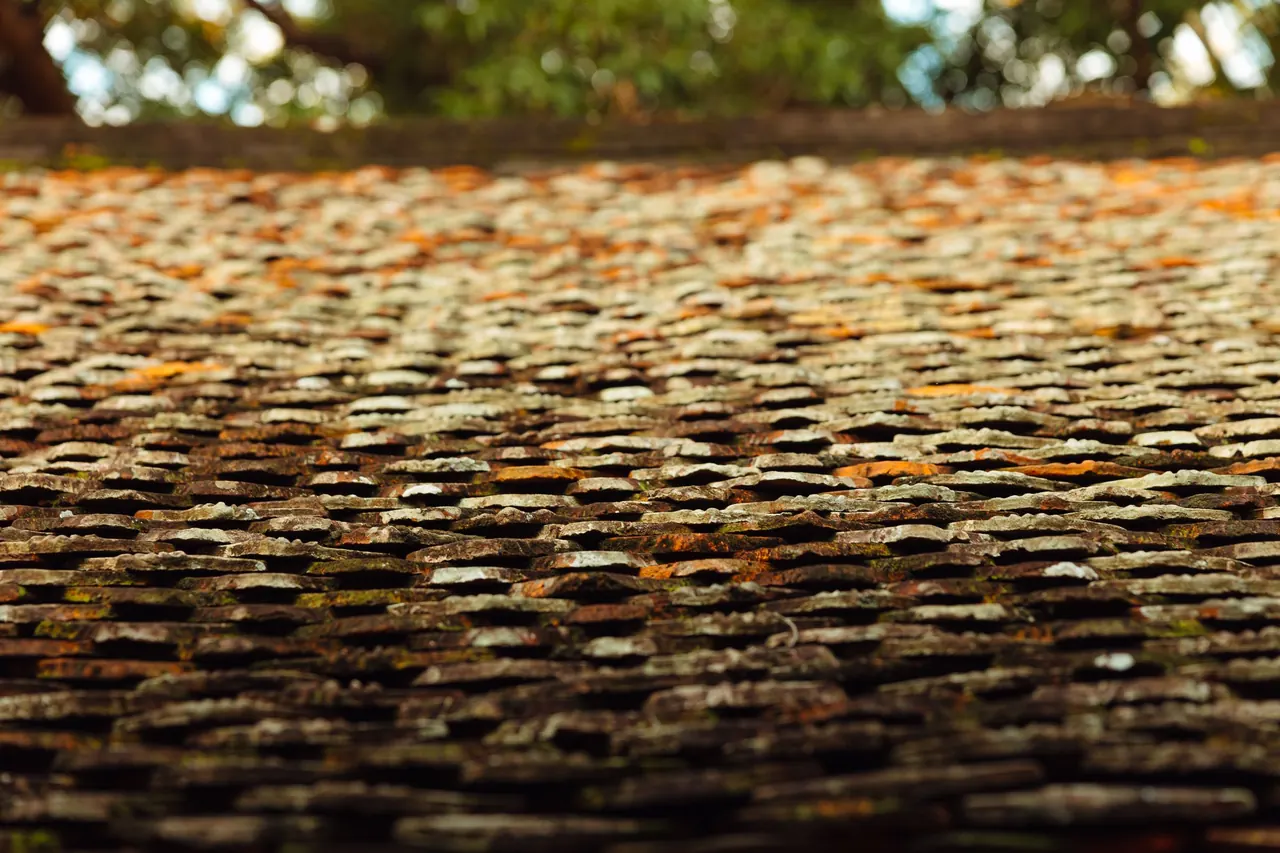
Old clay plain tiles hang on battens by small nibs. Frost gradually flakes the face of the tile and snaps the nibs, and a tile without its nib can sit in place for years before sliding out in a wind. We replace broken tiles one by one and look at those around them, because frost damage is rarely limited to one.
On a slate roof the slates often outlive the nails, and once the nails rust through, slates slip one at a time. We refix them with clips or straps. The clay hips sit on a bed of mortar along each hip line, and when that breaks down the hip tiles rock and let water in at the joints. As a national published figure, MyJobQuote's ridge tile repair guide gives £225 to £275 for a small repair of one to three tiles; a whole hip re-bedded on a hillside semi will be more.
Where the party walls rise through the roof
These semis have expressed party walls: the brick wall between two homes carried up above the roof rather than stopping under the tiles. That creates a long joint on each side, sealed with lead or a sloping mortar fillet. Fillets shrink and crack, lead lifts where its wedges work loose, and rain then runs down the wall inside the roof and appears on a bedroom ceiling, often a metre or more from the real cause. If the coping along the top has lost its pointing, water soaks down through the wall itself. A fault on next door's side can show up in your house, so we look at the upstand from both sides where we can.
Where the stack is part of the problem, our chimney repairs in Norbiton deal with it. If slates are slipping right across the roof, or you have had leaks in several places in a few years, re-covering may make more sense, and our Norbiton roof replacement page explains that. To book a visit, ring 0330 133 4111 or use the contact page.
Frequently asked questions
The ceiling under our bay window on Linden Crescent stains after rain. Is the main roof leaking?
Probably not. On these semis the usual cause is the flashing where the half-bay roof meets the front wall, or the bay roof covering itself. We check that before going near the main slope.
Water comes in beside the party wall upstairs in our Rowlls Road semi. What usually fails there?
Most often the mortar fillet or lead flashing where the covering meets the raised wall, or the top of the wall if its pointing has gone. A slipped tile next to the upstand can do the same. We look at the junction from outside on both sides before deciding what to repair.
Our Bonner Hill Road roof is slate with clay hips. Can the hips be fixed without touching the slate?
Usually. The hip tiles can be lifted, the old mortar cleared and the tiles re-bedded or mechanically fixed along the hip line, with only the slates at the edge disturbed. If slates next to the hip have slipped, we refix those at the same time.





