



 Google reviews

The hipped side of Piper Road
When the gutter on a hipped roof starts pulling away at a corner, the board behind it has usually gone first. Piper Road is a clear example. Kingston Council's character study calls it "a street of variety in roofs", gabled to one side and hipped to the other, and on the hipped side the fascia runs right round the eaves, turning a corner at each hip.
Water that gets into one of those corner joints spreads along both faces. So a repair that looked like one short piece from the ground often turns into two lengths once the old boards are off, and the soffit underneath may have softened too. The street has no street trees, so its boards fail from age, tired paint and leaking gutters rather than from leaves.
Look for flaking paint and dark staining along the roof edge, timber that feels soft when pressed, gutters dipping because their brackets have lost grip, or gaps in the soffit where wasps or birds are getting in.
Bargeboards on the gabled side and the C-roads
Across the road, the gabled houses have bargeboards running up the sloping edges of each gable. They take the full force of the weather, are awkward to reach for painting, and tend to rot first at the bottom ends where water runs off. Kingston's Residential Design SPD lists gable-fronted roofs with timber bargeboards and eaves detailing among the features of the borough's Victorian and Edwardian houses, and in Norbiton that covers the full-height gabled bays on Cobham Road as well as Piper Road.
On Cobham Road the gable sits at the top of a bay that rises two storeys from the front garden, so its bargeboards are the hardest boards on the house to reach for painting, and they are usually the ones left longest. A drone photo shows whether the paint has failed at the foot of each board before anyone puts up a ladder or tower.
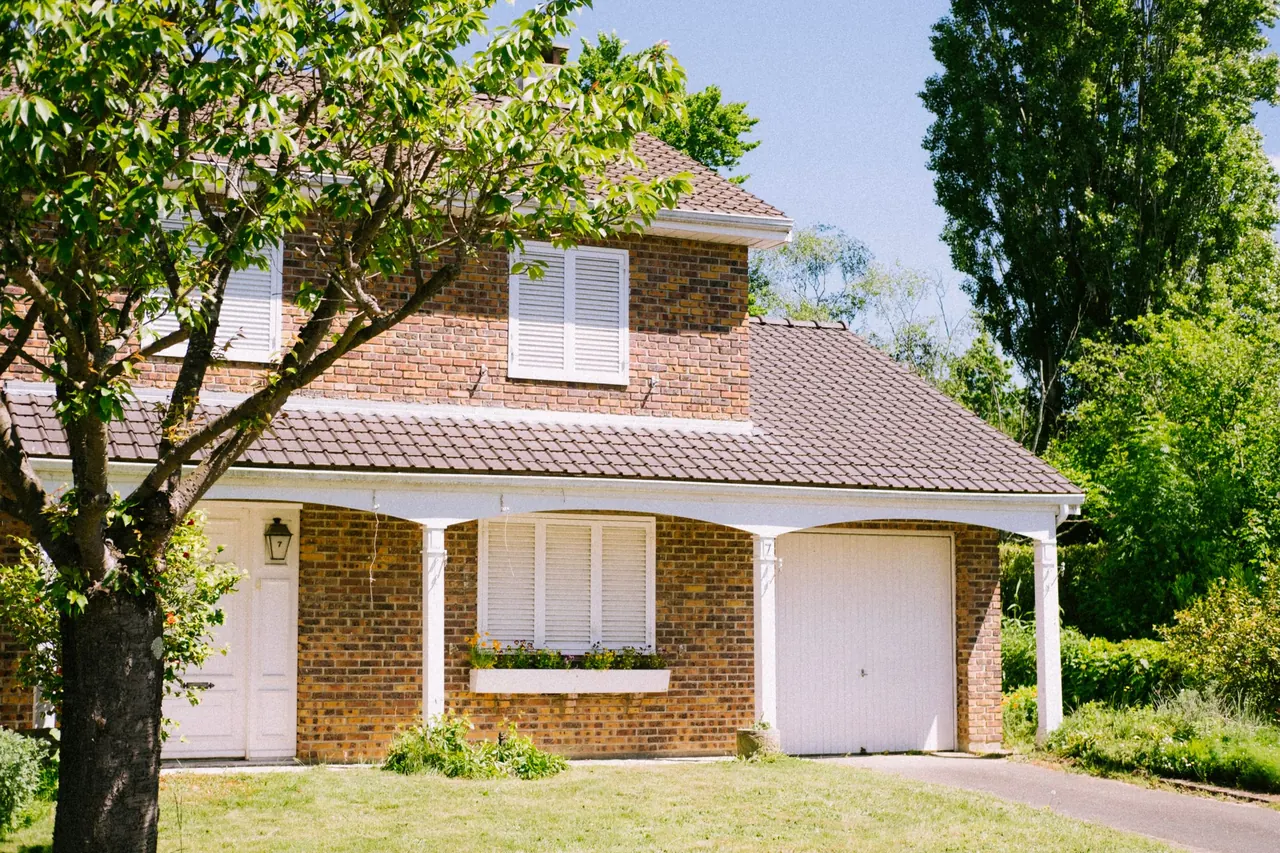
Capping, replacing and the rafter ends behind
A short damaged length can sometimes be cut out and replaced on its own. Capping, or overboarding, covers the existing timber with a thin uPVC board; it is cheaper but only works where the timber underneath is completely sound, because capping over rot hides it. Where the boards are rotten along most of the run, we take them down and fit new uPVC fascias, soffits and bargeboards, available in white, black, grey and woodgrain. On a period house a darker or woodgrain finish usually sits better than bright white, and ventilated soffits help where the roof space has no other eaves ventilation.
With the old boards off, we check the rafter ends behind and deal with any damage before the new boards go up. The gutter has to come down anyway, so the two are often done together, and our gutter installation page for Norbiton covers the gutter side. Keeping the new gutters clear through gutter cleaning in Norbiton stops new boards going the same way. As a national published figure, Checkatrade's fascia and soffit cost guide gives £90 to £170 per linear metre for replacement. See our main fascias and soffits page, or ring 0330 133 4111.
Frequently asked questions
Our house is on the hipped side of Piper Road. Why did one rotten corner turn into so much board?
On a hipped roof the fascia turns each corner, and water that gets into the corner joint spreads along both boards. Once they are off, the rot is often longer than it looked from the ground. We show you what we find before going further.
Can we keep the decorative bargeboards on our Cobham Road gable?
If the timber is sound, yes: the damaged sections can be repaired and left ready for painting. If it is rotten through, replacement in uPVC is the long-term option, and a darker finish keeps the gable from looking stark.
Is the soffit under our ground-floor bay on Dawson Road part of the same job?
It can be. Bay roofs have their own small fascias and soffits, and because the bay gutter often drips onto them they are worth checking while the main roofline is being done.





