



 Google reviews

Flat and lead roofs on the High Street
Walk along Kingston High Street and you see brick fronts, gables and parapets. From above, a lot of it is flat. The council's Old Town appraisal describes the High Street and its surroundings as having a wide variety of roof forms, traditional ones alongside late 20th century flat roofs and lead-clad mansards. Buildings there are generally two or three storeys, often with more rooms tucked into attics or mansards on top.
That mix brings a few typical faults. A flat deck that has been re-covered more than once can end up with layers built over each other, until the edges no longer sit under the parapet flashings. Outlets through the parapet silt up and the roof holds water. Equipment bolted through the covering, such as extract ducts and aerial brackets, leaves holes that open up as the fixings rust. On a lead-clad mansard, the sheets need room to move with heat, and where they were fixed too rigidly or cut too large they crack along the folds.
The appraisal says mansard proposals on the High Street are judged on their merits and asks for a mix of roof forms to be kept. In practice, repairs to a lead face stay in lead, while a flat deck hidden behind a parapet gives more freedom over the covering.
Charter Quay and the riverside
Down by the river, the same appraisal notes that the main part of Charter Quay and Bishops Palace House have flat or shallow pitched roofs. Large modern roofs of that kind usually carry a single membrane over a wide area, with outlets, rooflights, plant and edge details that all have to stay sealed. The membrane itself often lasts well. Trouble starts at the details: a lifted seam round a rooflight, a missing outlet grating that lets leaves into the pipe, or a membrane pulled tight at an upstand.
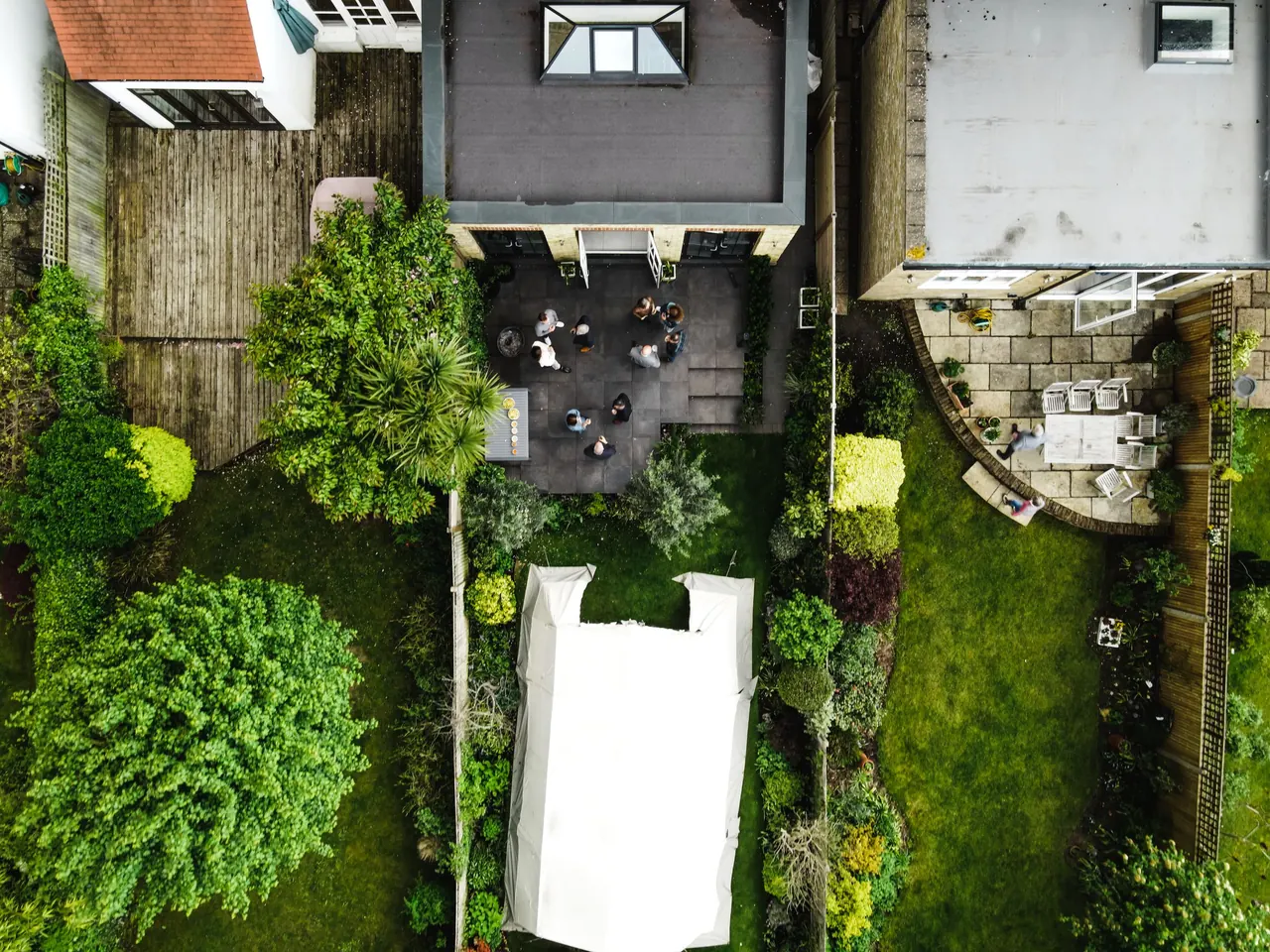
On roofs like these a drone flight is the quickest way to see the whole surface, any standing water and every upstand before anyone goes up. It also gives a managing agent photos to share with residents or the freeholder. Our page on Kingston roof inspections explains how the flight works.
Dormers and back additions in Canbury
Out of the centre, flat roofs sit on the backs of the Victorian houses. The council's character study for Canbury notes the roofscape there deteriorating with overbearing extensions, a sign that loft dormers and rear additions have gone onto many of its Victorian houses. A dormer top is a small flat roof directly above a bedroom, so a split shows quickly. The edges matter most: the drip into the gutter, the cheeks and the upstand where it meets the main slope.
Older back additions often still carry felt that has blistered and cracked after years of sun. If you are building a new dormer rather than fixing an old one, our roof installation in Kingston page covers how it ties into the slate.
Patch or re-cover
One split or a lifted trim on an otherwise sound roof is a repair. Leaks in several places, a deck that gives underfoot or blisters across the surface mean the covering is finished, and we strip it and lay GRP, EPDM rubber or torch-on felt to suit the shape of the roof and how it is used. Our main flat roofing page compares the three. For a rough idea of scale, MyJobQuote's London flat roof guide lists EPDM at around £80 to £120 a square metre. If water is still sitting on your roof two days after rain, our post on water pooling on flat roofs explains why that matters.
Frequently asked questions
Can you work on a flat roof above a High Street shop while it stays open?
Usually. We plan access from the rear or through an upper floor where we can, keep materials off the pavement and fit noisy work around trading hours if that helps.
Our lead-clad mansard on the High Street leaks near the top. Is it the flat part?
It could be either. The junction where the steep lead face meets the flat top is a common weak point, and so are cracks along the folds in the lead. We check both and tell you which it is before pricing anything.
Do you work with managing agents on riverside blocks like Charter Quay?
Yes. We can survey the roof, send photos and a written report to the agent and the freeholder, and price the repair for them to approve.





