



 Google reviews

One outlet behind each Market Place parapet
The buildings around Kingston's Market Place sit on narrow medieval plots. The council's Old Town appraisal records plot widths from as little as 3 metres, at No. 12 Church Street, to an average of 5 to 8 metres, and describes the buildings facing the square as mostly two or three storeys with a mix of gables and parapet walls. Behind a parapet the roof drains into a gutter you can't see from the street, and that gutter usually empties through a single outlet, out through the wall or down an internal pipe.
A blocked eaves gutter on a house spills over its front edge, which is messy but obvious. A blocked parapet gutter has nowhere to spill. It fills like a trough until the water rises above the lining or the flashing, then it runs inside: into the top floor, down a wall, through to the shop below. Because nobody can see the gutter, the first sign is often a ceiling stain.
On plots this narrow, gutters and valleys often run between two buildings, so one owner's outlet may also drain part of the neighbour's roof. Working out which outlet serves which roof is half the job.
What chokes an Old Town gutter
There are far fewer trees in the town centre than up the hill, so leaves are rarely the main culprit. What builds up behind a parapet is different:
- silt and grit washed off old slate and clay tile slopes over many years
- moss that grows on the roof, comes loose in rain and slides into the gutter
- windblown litter, plastic bags and takeaway packaging
- pigeon nesting material and droppings in the corners
- broken pieces of slate and debris left from past repairs
An outlet can also be too small for the area of roof feeding it, or set slightly high so a pool always stands in the gutter. Either fault turns a light build-up into a blockage much faster, and standing water slowly wears out the lining underneath. On an old building the outlet may also have been narrowed by layers of past repairs, each one laying new lining over the old.
Rodding an Old Town outlet and testing it
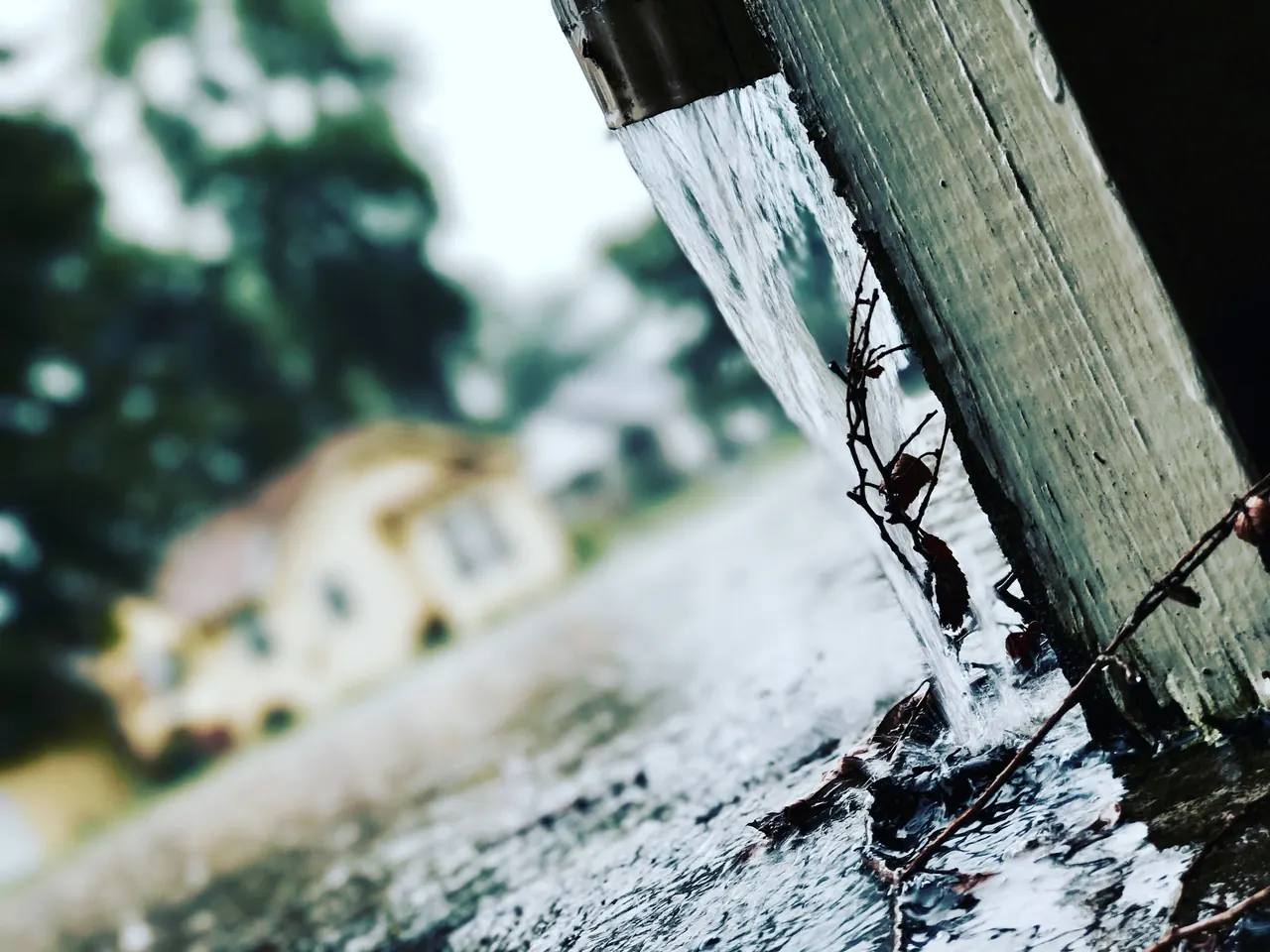
We start by finding which outlets serve which roof. Where the parapet gutter can't be seen from any window, a drone look at the roof shows the gutter, the outlet and the state of the lining before anyone climbs up. Then we clear the gutter by hand, rod the outlet and the pipe below, and run water through to prove it drains.
If the outlet sits high, has no grating or is too small, it can be reset or replaced. Where the lining has split from years of standing water, or the flat roof behind the parapet is failing, the repair goes further, and our flat roofing in Kingston page covers that. If water is already coming through a ceiling, treat it as an emergency roof repair. More on the service is on our main blocked gutter repair page.
Frequently asked questions
The parapet gutter on our Church Street building drains through next door. Who clears it?
Whoever is responsible under your lease or deeds, which is often a shared duty. We can photograph the gutter and the outlet, show both owners where the blockage is and clear it once both have agreed.
Can you clear a blocked outlet on a Thames Street building without scaffolding?
Often. Where there is safe access from a roof hatch or a neighbouring flat roof, no scaffold is needed. Where there isn't, we look at a tower or other access and explain the options before any work starts.
Pigeons roost on the parapet above our Market Place shop. Do they cause blockages?
They can. Nesting material and droppings collect in the gutter corners and round the outlet. Clearing it regularly and fitting a grating over the outlet stops most of that reaching the pipe.





