



 Google reviews

Back gutters behind wide stacks
Ask where a Kingswood chimney leak starts and the answer is often the back gutter. That is the lead tray on the uphill side of a broad stack that turns the water flowing down the slope around the chimney. On a roof pitched at around 50 degrees, a lot of water arrives there fast, and under oaks the tray also catches leaves, twigs and moss sliding off the tiles above.
Once the back gutter is packed, water builds up behind the stack and finds its way over the top of the lead or through a split in it. The stain then shows on the ceiling or chimney breast below, often only in heavy rain. Where a stack sits low between gables or in the valley of a roof, the problem is worse, because it collects water from more than one slope.
The fix is to clear the tray, check the lead for splits and lifted edges, and renew it where it has failed. If the leaves keep coming back, that stack needs a look every autumn, and our gutter cleaning visits in Kingswood can include it where it is reachable.
Stacks the appraisal asks you to keep
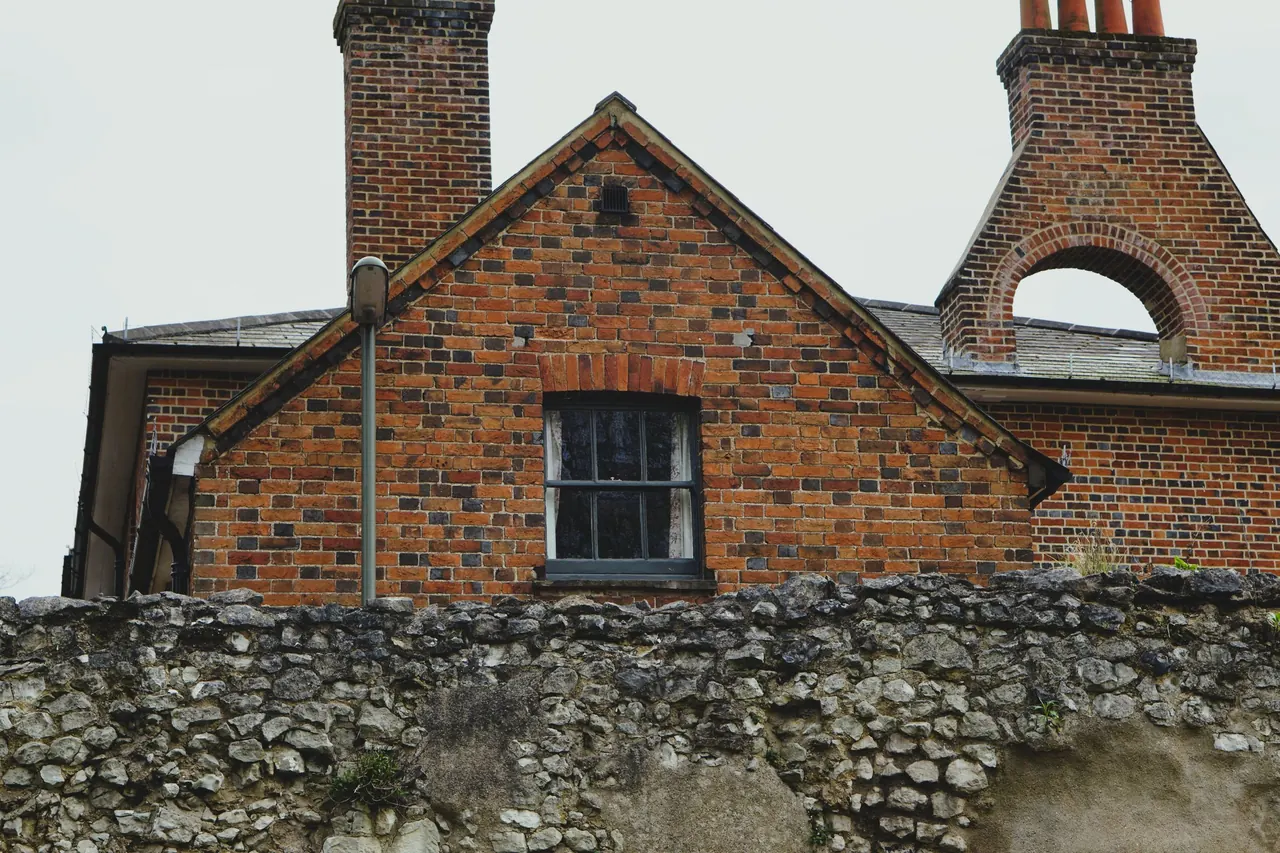
On the Edwardian houses around Kingswood station, the chimneys were never an afterthought tucked onto a ridge. The council's draft appraisal lists large chimney stacks among the typical features of these houses and asks owners to retain chimneys and pots. The planning background is on our Kingswood roofing page. Many houses have more than one stack, often with several pots.
A stack like that is a lot of brickwork standing in the weather on high ground. Rain driven sideways soaks into weathered joints, frost works on the wet mortar, and the flaunching around the pots cracks. The lead where the stack passes through the tiles is a long run of stepped flashing and soakers on each side of a steep roof.
Because the guidance favours keeping stacks, our starting point is to repair them. Taking a large stack down below the roofline is a bigger job than most people expect, and filling the gap in a roof of handmade clay tiles means finding a close match. If you are weighing it up, speak to the council first.
Disused flues in big Edwardian houses
Most Edwardian stacks served several fireplaces, and in many houses only one or two are still used, if any. An open pot over a disused flue lets rain fall straight down it and gives birds a nesting spot. A ventilated cap or bird guard stops both while keeping air moving, which matters, because a flue sealed at both ends traps damp in the brickwork. On a working flue the cowl or guard has to suit the appliance, so we check how each flue is used before fitting anything. Original pots stay on the stack wherever they are sound.
The top of a tall stack in the middle of a steep roof can't be seen from the garden, so a drone photographs the flaunching, pots, pointing and all four sides of the lead first, which also shows whether roof ladders will do or a scaffold is needed. As a national guide, MyJobQuote's chimney leadwork guide (2026) puts full leadwork replacement at £350 to £460 without scaffolding, and a large stack sits at the top of that range or above. Sometimes the leak turns out to be a valley or a slipped tile beside the stack, and our Kingswood roof repair page covers that.
Frequently asked questions
Our stack sits in the valley between two gables on The Chase. Why does the ceiling below it stain?
A stack in a valley collects water from two slopes, and its back gutter fills with leaves quickly. When the tray overflows, water goes over the lead and into the roof. Clearing it and renewing any split lead usually stops it.
Can the original pots on our Waterhouse Lane house be reset rather than replaced?
Usually. If a pot is uncracked, it is lifted, the flaunching renewed and the pot bedded back in place. Only a cracked or broken pot needs replacing, and we look for a matching one.
Several of our Kingswood flues are unused. Should the pots be capped?
A ventilated cap on each unused pot keeps rain and birds out while letting the flue breathe. Leave any working flue to suit its appliance, and keep the pots themselves, which the draft appraisal asks owners to retain.





