



 Google reviews

Back slopes facing the park
After a storm, the street side of a house on the north-east side of Arthur Road can look perfect while the back has taken the damage. Merton Council's appraisal of Arthur Road and Leopold Road describes those back gardens falling sharply towards the park and forming a wooded backdrop, topped by the houses' rooflines and chimneys. The rear slopes face open parkland and the former golf course, with little to break the wind. The same goes for houses on the park side of upper Home Park Road.
The trees that make these gardens worth having are the main hazard in a storm. A heavy limb can break tiles, crack a rafter and pull a gutter off in one go, and on a sloping garden it often lands on the part of the roof you cannot see from the house.
If something has happened now, call 0330 133 4111. Someone picks up whatever the hour. We ask what has happened, whether water is coming in and whether anyone is at risk. Our Morden base is about 2 miles from Wimbledon Park as the crow flies.
What gives way first on these houses
- Loft-room dormers on Home Park Road. Many of the original houses have second-floor rooms in the roof lit by dormers. A split in an old felt dormer top, or lead lifted at a cheek, puts water straight into a bedroom ceiling.
- Hips on steep clay roofs. A loose hip tile slides a long way, and on a hipped roof the hips run right down to the eaves over paths and drives.
- Turrets and tall stacks on Arthur Road. A small conical turret roof has many cut tiles in short courses, so one lost tile leaves a big gap. A pot loosened by cracked flaunching on a tall stack is a danger to anyone on the path below.
- Valleys packed with leaves. In a long downpour, a valley behind a front gable that is full of oak leaves can send water under the tiles rather than into the gutter.
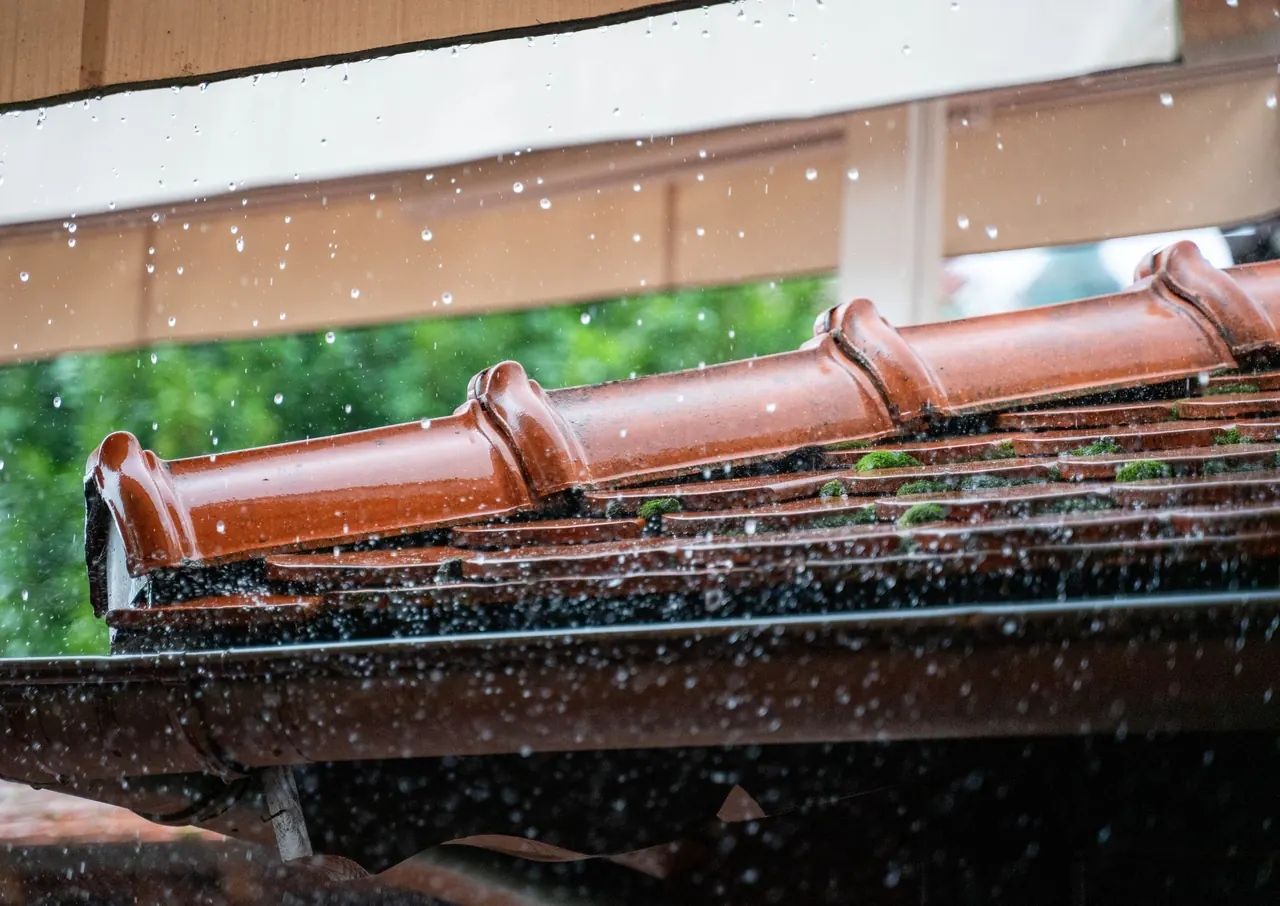
A sloping plot in bad weather
If a whole tree has come down on the house and there is any sign of structural damage, call the emergency services before you call us.
On site, the first look is from the ground and, where safe, from inside the roof space. Ladders on a garden that falls away towards the park are a risk in wind and rain, so on these plots we may fly the drone once the gusts drop, to see the rear slope without putting anyone on it. The temporary work is whatever stops the water and removes the danger: refixing or replacing lost tiles, sheeting an open section, taking down a loose pot, patching a split dormer top or clearing a valley so it drains.
Once the roof is secure, we come back in dry weather to price the permanent fix, whether a roof repair, chimney work on a damaged stack, or something larger. When the weather has passed, our article on spotting roof damage after a storm explains what to look for on the slopes you can see from the garden.
Frequently asked questions
My house backs onto the park from Arthur Road. Why did the back slope take the damage?
Because the gardens drop sharply towards the park, the rear slopes face open ground and catch the full wind across it. The front slopes are sheltered by the road and the houses opposite. After a big storm, it is worth having the back checked even if the front looks fine.
Rain is coming in round the dormer of my loft room on Home Park Road. What can be done before a proper repair?
A split dormer top or lifted cheek lead can usually be sheeted or patched to keep the rain out. The permanent repair, or a new flat roof covering on the dormer, is then done in dry weather.
An oak branch from the park has landed on my roof. Should I try to move it?
No. A branch lying on tiles may be holding broken pieces in place, and pulling it off from a ladder on a sloping garden is how people get hurt. Keep clear of the area below, put a bucket under any drip inside and call us. If the branch came from a council or park tree, tell the owner too, as they may want to deal with the tree itself.





