



 Google reviews

Why the corner goes first
Many of Woodmansterne's 1930s to 1950s houses have hipped roofs, so their gutters turn an external corner at every hip. A corner carries water from two runs at once and relies on a seal or a solvent joint to stay tight. On houses like these, the corners tend to be the first joints to give up, and the back hip, where runs are often longest, is the usual one.
Before resealing a corner, we check the fall on both runs leading into it. If one run has sagged, it pushes water back towards the corner and the joint sits under a pool every time it rains. Fixing the seal alone would only buy a few months. A repair on a hipped house usually covers:
- replacing the corner piece, or its seals, with a matching part
- resealing or replacing union joints along the runs
- refixing or adding brackets where a run has dropped
- resetting the fall so water runs to the outlet
- swapping a single cracked length for a matched one
Where the bracket screws keep pulling out, the problem is the fascia, not the gutter. In that case the board needs renewing first, and our fascias and soffits in Woodmansterne page covers that.
Wet brickwork beside the downpipe
Downpipes on houses of this age often come down the corner of the house beside a drive or a side passage, and they take knocks from bins, ladders and car doors. Typical damage is a cracked offset at the top, a pipe pulled away from its clips, or a shoe at the bottom knocked sideways so water discharges against the brickwork instead of into the gully.
The sign is usually a dark patch on the wall beside the pipe, or green growth at the bottom of it. Left alone, that wet corner soaks the brickwork and can bring damp through to the inside wall. Refitting the pipe, replacing the cracked section and adding a clip or two is a small job compared with the damage it prevents. If water is running down the wall behind the gutter rather than dripping over it, our article on water leaking behind a gutter explains the usual causes.
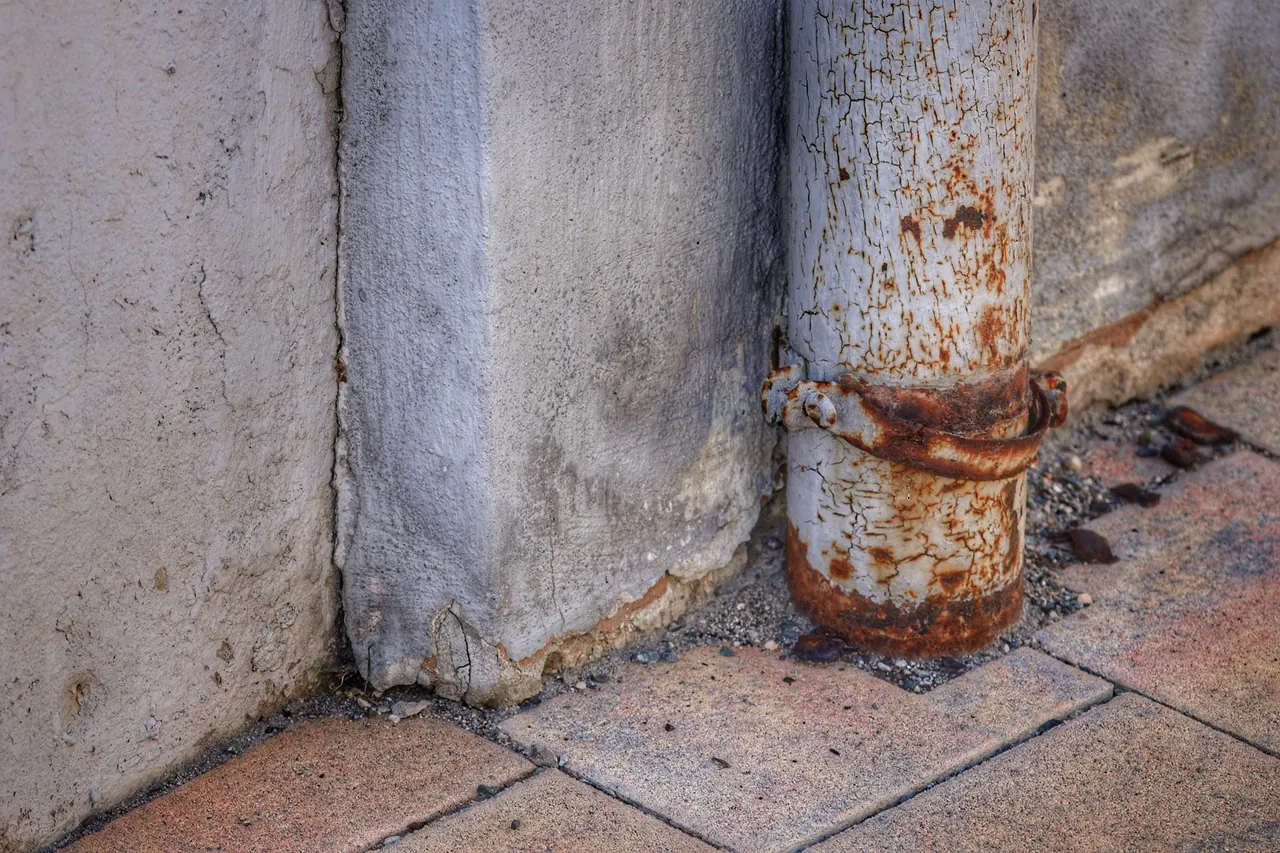
Iron on the older Woodmansterne Street houses
The council's 2008 townscape study lists north Woodmansterne among the borough's pockets of pre-Victorian development, and some older buildings along Woodmansterne Street predate the suburbs around them. Houses like these may still have cast iron gutters and downpipes. Cast iron lasts well when painted, but joints rust open and brackets corrode, and a cracked section can be heavy and dangerous if it falls.
Iron can be repaired: joints remade, brackets replaced, a cracked length swapped. Weston Acres on Woodmansterne Street is Grade II listed, and on a listed house we repair or match what is there rather than replace it with something different.
When repairs stop making sense
When a uPVC system is brittle, faded and leaking at several joints at once, repairs turn into a stopgap. A new gutter installation in Woodmansterne is then usually the better spend, and we will tell you where your gutters sit on that line. If the run is simply full of leaves, that is a clean rather than a repair. Our main gutter repairs page has more on how we work.
Frequently asked questions
Only the corner at the back hip of our Kingscroft Road semi drips. Why that one?
The back of the house is often where the runs are longest or where a run has dropped, so that corner takes the most water. We check the fall on both sides of it before replacing the corner or its seals.
The cast iron gutter on our older house off Woodmansterne Street has a rusted joint. Can it be mended without going to plastic?
Yes. The joint can be taken apart, cleaned and remade, and corroded brackets replaced. If a length has cracked, a matching cast iron section can be fitted, then the run painted to protect it.
Can you replace one cracked length on a run of old uPVC that is no longer made?
Often, yes. Many older profiles have a compatible modern match or an adaptor. If nothing fits properly, replacing the run from one corner to the next keeps it tidy without redoing the whole house.





