



 Google reviews

Living under the trees of Camp Road and West Side
The western end of Camp Road is a narrow track lined with trees and undergrowth beside the Royal Wimbledon golf course. Eversley Park's five houses are set among mature trees the developers brought in around 1982. On West Side, the houses stand behind a tree-lined verge with Cannizaro Park directly behind them, and Chester House and the grass in front of it are covered by Tree Preservation Orders.
All of that makes these streets green and quiet. It also means that, alongside the usual wind damage, these roofs carry a risk that open streets do not: a branch, or a whole limb, coming down on them. A heavy branch can break slates, snap a ridge, split a valley or punch through a flat roof over a garage or link.
When it is worth calling straight away
- A branch has landed on the roof and water is coming in, or the branch is still hanging.
- Slates, tiles or chimney pieces are loose above a path, a drive or the pavement.
- Water is coming through a ceiling, especially in an attic storey under a mansard.
- A valley or parapet gutter has blocked in a storm and is overflowing inwards.
A single slipped slate with no water coming in can normally wait for an ordinary repair appointment. If you are unsure, ring 0330 133 4111 and describe what you can see from the ground; we answer at any hour.
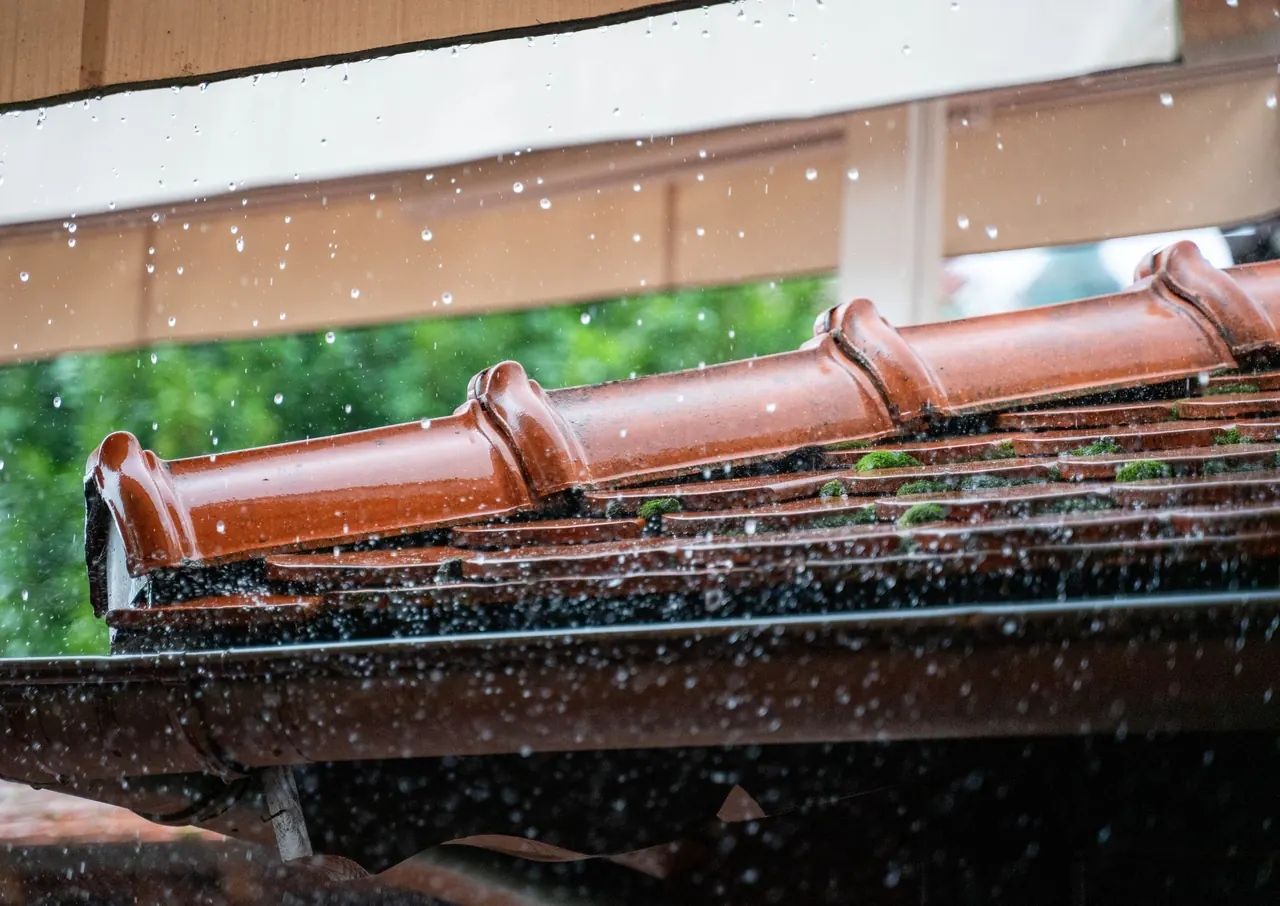
Getting to a house on the Common's edge in the dark
Access along this edge is unlike an ordinary street, and it is worth telling us about it on the phone.
West Side Common. The houses are set back behind a wide grass verge, a gravel path and high brick walls. If there is a gate, tell us the code or who will open it.
Camp Road. The eastern end is a narrow defile between the park wall and the Fox and Grapes; the western end is a country track. A van and ladders can get through, but we need to know where to stop without blocking the road.
The Crooked Billet. Cottages on the north side front straight onto the footway, and concrete bollards line the kerb. If anything looks loose above the footway, keep people back from it.
Protecting listed fabric while the roof is open
The first job is to stop water getting in and make anything loose safe. Depending on the damage, that may mean taking down loose slates and pots, refixing what can be refixed, sheeting a broken section securely, or clearing a valley that has backed up. We do not cut or move trees on the roof beyond what is needed to make the roof safe; that is for the owner, a tree surgeon and, in a conservation area or under a Tree Preservation Order, the council.
On listed and locally listed houses, which are common here, we keep the emergency work to what protects the building, and we set aside original slates, tiles and pots that come down so they can go back on later. Once the house is safe, the permanent work usually goes through our roof repairs on houses by the Common or, for a damaged garage or extension roof, our flat roof work on the Chester Road estate.
More on how the service works is on our main emergency roof repair page, and our guide to storm damage you can check from the ground is useful the morning after.
Frequently asked questions
A tree from the Common has dropped a limb on my West Side roof. Who removes it?
We make the roof safe and weathertight. Removing the tree or limb is for the tree's owner and a tree surgeon. On the Common itself that means the Conservators; on a private plot in the conservation area, the council usually needs notice before tree work.
Can you make a listed Crooked Billet cottage safe without harming it?
Yes. Emergency work is temporary and reversible: sheeting, careful refixing and keeping fallen original material for reuse. Nothing is changed that would need consent.
Can you get a ladder down the Hanford Row track at night?
Yes, on foot from the end of the track if a van cannot turn. Tell us where the damage is when you ring, so we bring what fits down a narrow path rather than what needs a drive.





