



 Google reviews

A council estate inside a historic park
Behind the Georgian frontage of West Side, a different Wimbledon Common begins. Chester Road, Beech Close and Sycamore Road were built in the early 1950s, probably as a council estate, on land that was once part of the Cannizaro estate. The council counts 56 two-storey terraced houses and nine blocks of three-storey balcony-access flats, set in landscaping that has matured into something close to parkland. The park itself runs along much of its edge.
The houses were built plain, and estate houses of this kind tend to collect garages, porches, rear kitchens and side additions over the decades. Most such additions are roofed flat, because a flat roof is the simplest way to cover a small extension on a two-storey terrace. Flat roofs on these additions, often decades old now, are usually the first part of a house like this to need work.
What trees from Cannizaro Park do to a flat roof
The park's trees stand right beside the estate, and its own planting has grown up alongside them. For a flat roof, that means:
- Blocked outlets. Leaves, seed and twigs collect at the outlet or the gutter edge, water ponds behind them, and ponding shortens the life of any covering.
- Moss and grit. On old felt, moss holds water against the surface and the mineral finish wears off, exposing the bitumen to sunlight.
- Shade. A roof that never fully dries out after rain ages faster at the laps and upstands.
- Branch strikes. A falling branch can puncture a covering that would shrug off ordinary weather.
Our guide to standing water on a flat roof explains when ponding is a warning sign rather than a passing puddle.
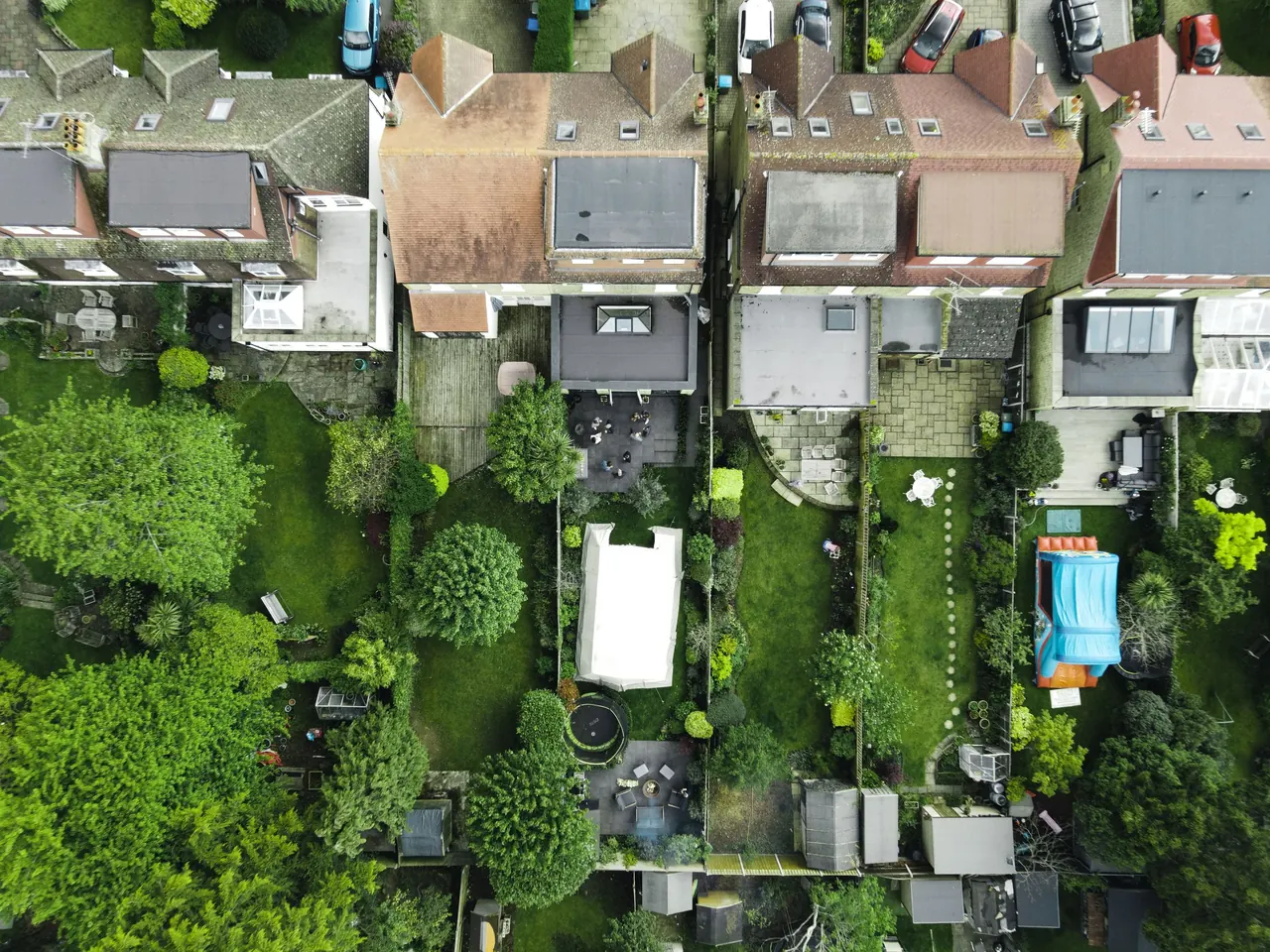
Where garage roofs on Chester Road meet the house
On a 1950s terrace the weak point of an added flat roof is nearly always the abutment, where the new roof meets the old brick wall. Older work often relied on mastic smeared into the joint instead of a flashing let into the brickwork. Once that cracks, rain runs down the wall behind the upstand and appears on the ceiling inside, sometimes metres from the actual gap.
A sound roof with one damaged area can be repaired: a new section, a remade upstand, a cleared and reset outlet. A roof that leaks in several places, blisters across the surface or feels soft underfoot is better stripped back to the deck. If the deck has rotted, we show you before we price for it, because a new covering on wet boards fails quickly.
For a new covering we use one of three systems:
- GRP fibreglass, a seamless laminate that suits small porch and extension roofs with awkward corners.
- EPDM rubber, laid in large sheets with very few joints, a good fit for single garages.
- Torch-on felt, for straightforward like-for-like replacement.
Checkatrade's flat roof replacement guide gives published national figures of £80 to £100 per m² for EPDM and £95 to £120 for GRP, plus VAT, as a starting point for budgeting.
Flat roofs elsewhere along the Common's edge
The estate is not the only place with flat roofs. On the period houses, the top of a mansard is often shallow or flat, bay windows on Victorian villas carry small lead or felt roofs, and new houses on rebuilt plots often have flat links and terraces. On those older and listed buildings, the covering and edge detail need more care, because they show from the Common.
Where a flat section is part of an older pitched roof, our repairs to the Common's period roofs deal with the junctions. For a flat roof on a brand new extension, see new roofs on the garden plots behind West Side. The main flat roofing page sets out the lifespans of each system.
Frequently asked questions
A Cannizaro Park tree hangs over my Beech Close garage. What matters most for the roof?
The outlet. EPDM and GRP both have few joints for debris to catch on, but no covering survives years of ponding behind a blocked outlet, so a roof under park trees needs sweeping after each leaf fall.
Does a new flat roof on a Sycamore Road extension need planning permission?
Re-covering an existing flat roof like for like does not normally need permission. A new extension on the estate is in the West Wimbledon Conservation Area, where permitted development is narrower, so check with Merton Council before building.
Can the flat roof over a balcony-access block on Sycamore Road be re-covered in sections?
That is a question for the freeholder or managing agent, who usually arranges work on shared blocks. Phasing is possible, but every new section has to lap properly onto the old, so we look at the whole roof before suggesting it.





