



 Google reviews

North View was built facing the other way
When Nos 1 to 8 North View went up in 1882, there was no public road in front of them. Their fronts faced a private road from Camp View, and their backs looked onto the Common. The road came in 1894 and the backs became the fronts. So the elevation facing the road was never meant to be the show side, and the complicated roof parts sit behind and above it.
Nos 5 to 8 are four storeys of stock brick, each with a three-storey canted bay topped by a gable that rises out of a mansard roof. Nos 1 to 4 are a storey lower, with dormers over the bays and a four-storey side tower on Nos 3 and 4. Between the mansard slopes, the gables and the towers there are valleys, back gutters and lead junctions that nobody standing on North View can see.
Camp View, Caesar's House and the West Side frontage
Round the corner, Nos 1 to 4 Camp View are red brick houses of 1881 with square bays to the upper floors and pargetted gables. Caesar's House, attached to No 1, has its top floor in a mansard with a Palladian window set in a Dutch gable, and its rear elevation adds more mansards, another Dutch gable and a semi-circular turret. A turret roof meets the main roof in curved lead that is almost impossible to judge from the ground.
On West Side Common the big houses sit behind a wide verge, mature trees, a gravel path and high walls. West Lodge, with its tall ornamental chimneys and attic rooms in large gables, is one of the tallest buildings on the row. From the Common you see the top of it through the branches and very little else.
Mansard kerbs, turrets and towers
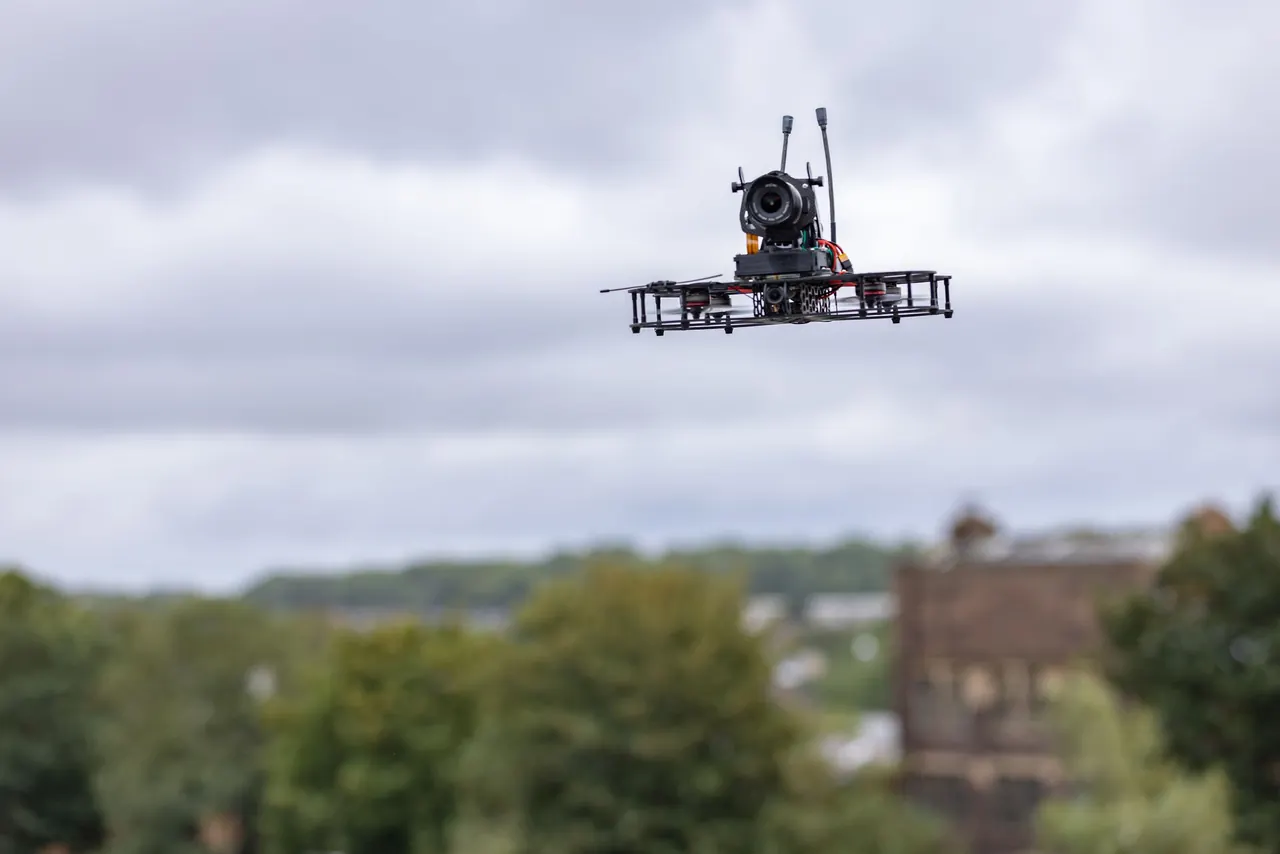
For most houses here we start with the drone, flown from your own garden or drive. It stays over your roof and is not launched from or flown out across the Common, which the Wimbledon and Putney Commons Conservators manage under their own byelaws, and every flight follows the Civil Aviation Authority's drone rules. It gives close-up photographs and video of each slope, the ridges and hips, the valleys, the stacks, the flashing and the gutters. We check the weather, wind, branches and any cables before each flight, and if it is not safe to fly that day, we come back.
Where there is a loft hatch, we look inside as well. On a mansard or attic storey we pay most attention to where the steep lower slope meets the flatter top, because rain driven off open ground finds its way in there first. Damp staining on rafters, wet insulation and daylight at the eaves all tell us more than the outside alone.
On these houses we look in particular at:
- Mansard kerbs and hidden gutters on North View and Caesar's House, where the slope changes and lead or a box gutter takes the water.
- Turret and tower roofs, where curved leadwork and small slates are easily disturbed by wind.
- Slate fixings on the larger Victorian roofs, where corroded nails let slates slide one at a time.
- Tall stacks, their pots, flaunching and flashing.
- Valleys under the trees along the Common and Cannizaro Park, which fill with leaves and hold water against the lead.
Afterwards we go through the photographs with you and separate what needs doing now from what can wait. For a rough idea before you ring, MyJobQuote's roof survey guide puts a basic visual check at £100 to £200.
Before you exchange on a locally listed house
These houses are locally listed, and the assessment recommended Camp View for statutory listing. A buyer needs to know whether the mansard and gable leadwork is sound, because putting it right means scaffolding to four storeys and matching materials. A survey before exchange gives you photographs to put in front of the seller. Our article on checking a roof before you buy lists the questions worth asking.
If the inspection turns something up, it becomes a quote for repairs to period roofs by the Common or for work on the tall stacks. The main roof inspection page explains the method in more detail.
Frequently asked questions
Can the drone see the turret at the back of Caesar's House?
Yes. It can circle the rear elevation and photograph the turret roof, the Dutch gables and the mansards close up, which is the only practical way to see them without scaffolding.
Which part of a North View roof tends to fail first?
Usually the junction where a gable rises out of the mansard, and the back gutters behind it. Lead there moves with heat and wind over the years, and once it splits, water runs straight into the attic storey.
Will you tell me if the leadwork is original?
We will tell you what we can see: old cast lead, later sheet lead, or patches done in sealant. Sealant repairs on a mansard are a common sign that the lead behind needs proper attention.





