



 Google reviews

Valley outlets over the shops at 279 to 291 Kingston Road
Merton Council's Merton Hall Road appraisal dates the plans for the terrace of shops with flats at 279 to 291 Kingston Road to 1903. Its main roofs run at right angles to the road, so each shop presents a gable to Kingston Road. The appraisal calls them Dutch gables in one place and a simpler inverted V in its building notes, with a more elaborate gable at 283 and taller gables on the two-and-a-half-storey end buildings. The shops sit right on the footway.
A roof turned end-on to the street sheds its rain to the sides, into the valley between each pair of gables. That water runs along the valley to an outlet or hopper at the front or the back. Those valley gutters and their outlets over the shopfronts are what fail: a split lining, a cracked hopper or a choked outlet drips onto the pavement and the signboard, and a downpipe that has come loose sends water down the face of the building. Repairs mean working above a busy footway, so access is agreed with the shop and the flat owners before anything starts.
142 to 154 Merton Hall Road, from 1902, is a similar terrace of flats over shops, though there the main ridge runs along the road with an ogee-shaped Dutch gable to the front of each shop, so the valleys behind those gables need watching instead.
Cast iron on the 1880s and 1890s houses
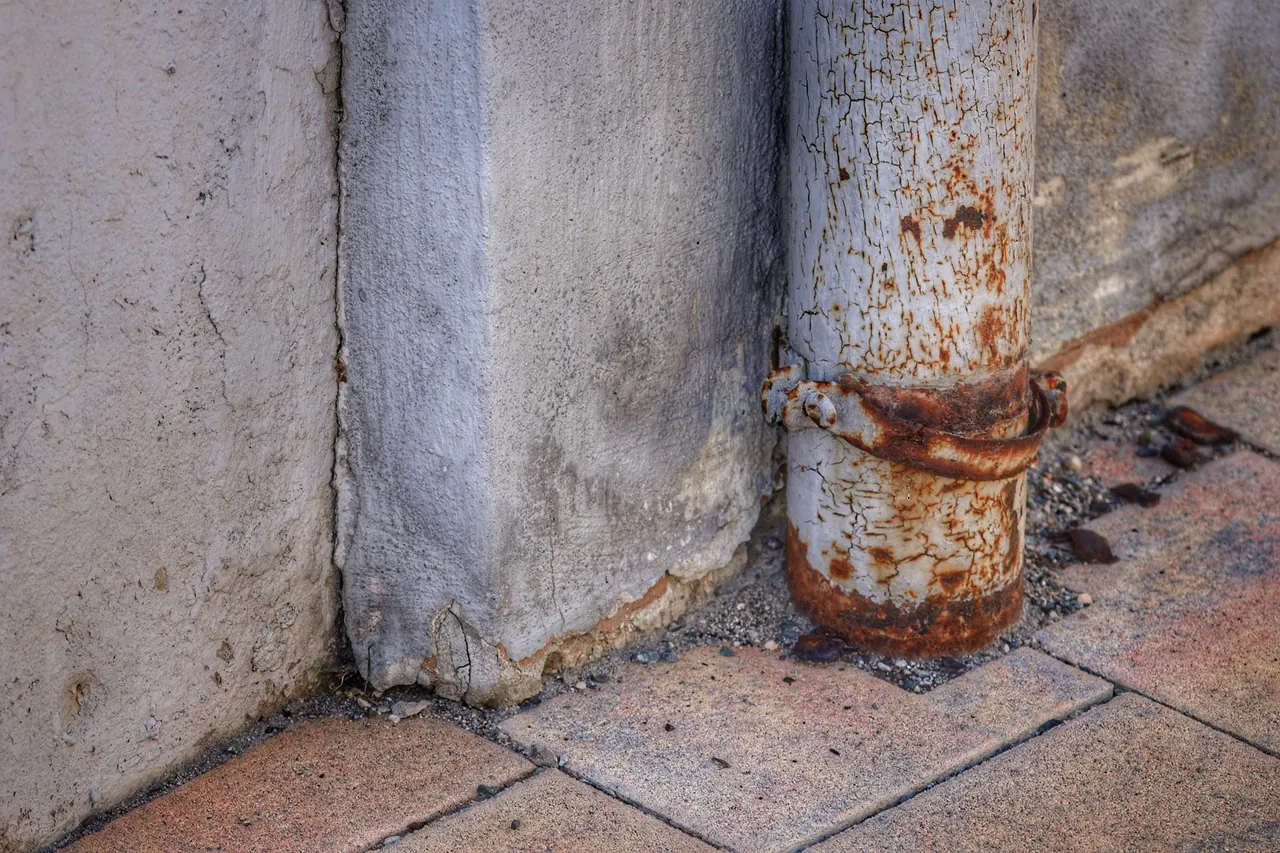
Most houses on Merton Hall Road went up between 1884 and 1902, when cast iron was the usual gutter, and some may still have it. Sound cast iron can usually be repaired rather than replaced: a leaking joint resealed, surface rust dealt with before it eats through, or a single cracked length swapped for a matching section. In a conservation area, that keeps the front looking as it should.
As a national guide, MyJobQuote's gutter repair cost guide gives £60 to £150 for resealing or repairing a leaking joint. Joints of the same age tend to fail together, so we look along the whole run, not only at the drip you called about.
Plastic runs on the Chase avenues
Where a house on Quintin, Richmond or Chatsworth Avenue now has uPVC gutters, they fail in more familiar ways: dried joint seals, a bracket pulled out by the weight of wet lime or plane leaves, or a short length between gable and party wall that has lost its fall because the fascia behind it has moved. If a run is cracked in several places or the board behind has gone soft, repairs become a stopgap, and we say so.
Water marks on the pebbledash can show where to look. Staining that starts behind the gutter, high on the wall, points to the fascia rather than a joint. Our article on water leaking behind a gutter covers that case, and fascias and soffits in Merton covers replacing the boards. If the gutters are overflowing rather than leaking, blocked gutter repair in Merton is the right page.
Frequently asked questions
The hopper above our Kingston Road shop drips even when it is not raining hard. What has failed?
Usually the hopper itself has cracked, or the joint where the valley outlet drops into it has opened. Both can be repaired or the hopper replaced on its own. If the valley lining above it has split, that part is roof work, which roof repair in Merton covers.
The cast iron gutter on my 1890s Merton Hall Road house is rusting on the outside. Is it failing?
Not necessarily. Surface rust is common on cast iron this age. What matters is the inside of the gutter and the joints. If the metal is sound, it can be cleaned, treated and repainted. A length that has rusted through is replaced with a matching section.
The brickwork on our shop at 142 to 154 Merton Hall Road has been painted. Does that hide a leaking gutter?
It can. Paint shows less of the green streaking that gives a joint away on bare brick, so look instead for paint blistering or flaking in a line below the gutter. We check each joint from above and photograph any that are wet.





