



 Google reviews

Shared runs on Watery Lane and Church Lane
Terraces are fairly rare in the John Innes estate. The council's character assessment counts three in Watery Lane, three in Manor Gardens and four at the southern end of Church Lane, with most other houses detached or semi-detached. It also notes cottages at 38 to 46 Watery Lane that appear on the 1865 map and were rebuilt by Quartermain, and that Watery Lane has no street trees, unlike most roads nearby.
On a terrace, the gutter usually runs from one house straight into the next. A joint that starts dripping outside one front door sends water down the wall between two houses, and a bracket that drops at one end puts a low spot in a run that several owners share. The assessment also notes that painted brickwork is concentrated in the Watery Lane terraces and in the cottages on the south side of Church Lane, and a dripping joint shows as a dark streak on paint long before it shows inside.
Cast iron that has been left too long
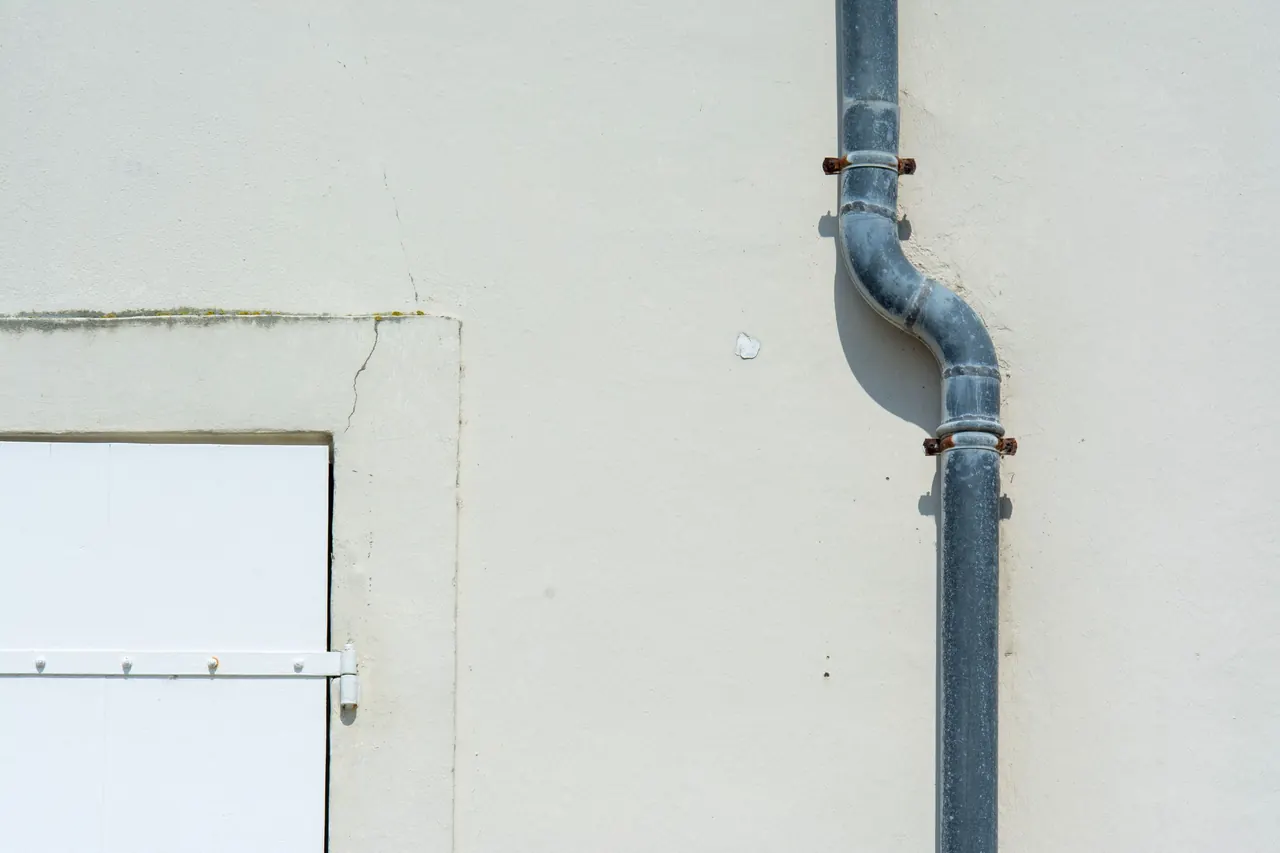
The council's design guide says the gutters and downpipes on these houses were originally cast iron, and warns that cast iron gutters, pipes and their supports need careful maintenance, because if they are allowed to rust they can become unsafe through their own weight.
The faults on old cast iron follow a pattern:
- the bolted joints between sections rust and start to weep
- brackets corrode and drop, so the run loses its fall and holds water
- a section cracks where it was hit or where ice split it
- a downpipe splits down the back against the wall, out of sight from the street
Where the metal is still sound, cast iron can be taken down, cleaned, re-jointed and rehung on new brackets. A section that has rusted through can be replaced on its own with a matching profile. When most of a run has gone, we say so and price a replacement through our Merton Park gutter installation page.
The plastic on the 1920s semis
On the mid-1920s semis on Mostyn Road and the 1930s houses round Circle Gardens, outside the conservation area, any plastic runs fail in their own way. The faults there are dried-out joint seals, clips that have worked loose, and lengths that have gone brittle after decades of sun and split. These are quick repairs, and a new seal or bracket usually puts the run right.
On any repair visit we look along the whole run, not only the drip you called about, because joints of the same age tend to fail together. We check the fascia behind, since a gutter cannot stay up on a soft board. If water is getting behind the gutter rather than over the front, our article on water leaking behind a gutter explains the usual causes.
MyJobQuote's gutter repair guide gives a UK average of around £215 for a repair; a cast iron joint on a terrace may need more access than that assumes. Further east, our Colliers Wood gutter repair page covers the terraces there, and the main gutter repairs page explains our work in general.
Frequently asked questions
The downpipe at the back of my Watery Lane terrace has split down the back. Can just that length be changed?
Yes. A single length of cast iron downpipe can be replaced, and we check the joints above and below while it is off.
There is a dark streak on the painted brick between my house and next door's on Church Lane. Is it the gutter?
Most likely a joint or a dropped bracket above it. We check from a ladder or by drone and show you which side of the boundary the fault is on.
My cast iron gutter on Manor Gardens is sagging in the middle. Is it safe?
The council's guide warns that rusted cast iron can become unsafe because of its weight. If it is visibly hanging or loose, keep clear of it and call us. Usually the brackets have failed and the gutter itself can go back up.





