



 Google reviews

Wind across the Rushett fields
Malden Rushett is a short run of houses with open Green Belt farmland on most sides. In a suburb, rows of houses shelter each other. Here, a south-westerly crossing the fields reaches the gable ends and ridges with little in the way. The parts that give first are fairly predictable: verge slates and pantiles along the edge of a gable, ridge tiles bedded in old mortar, and lead around a chimney stack.
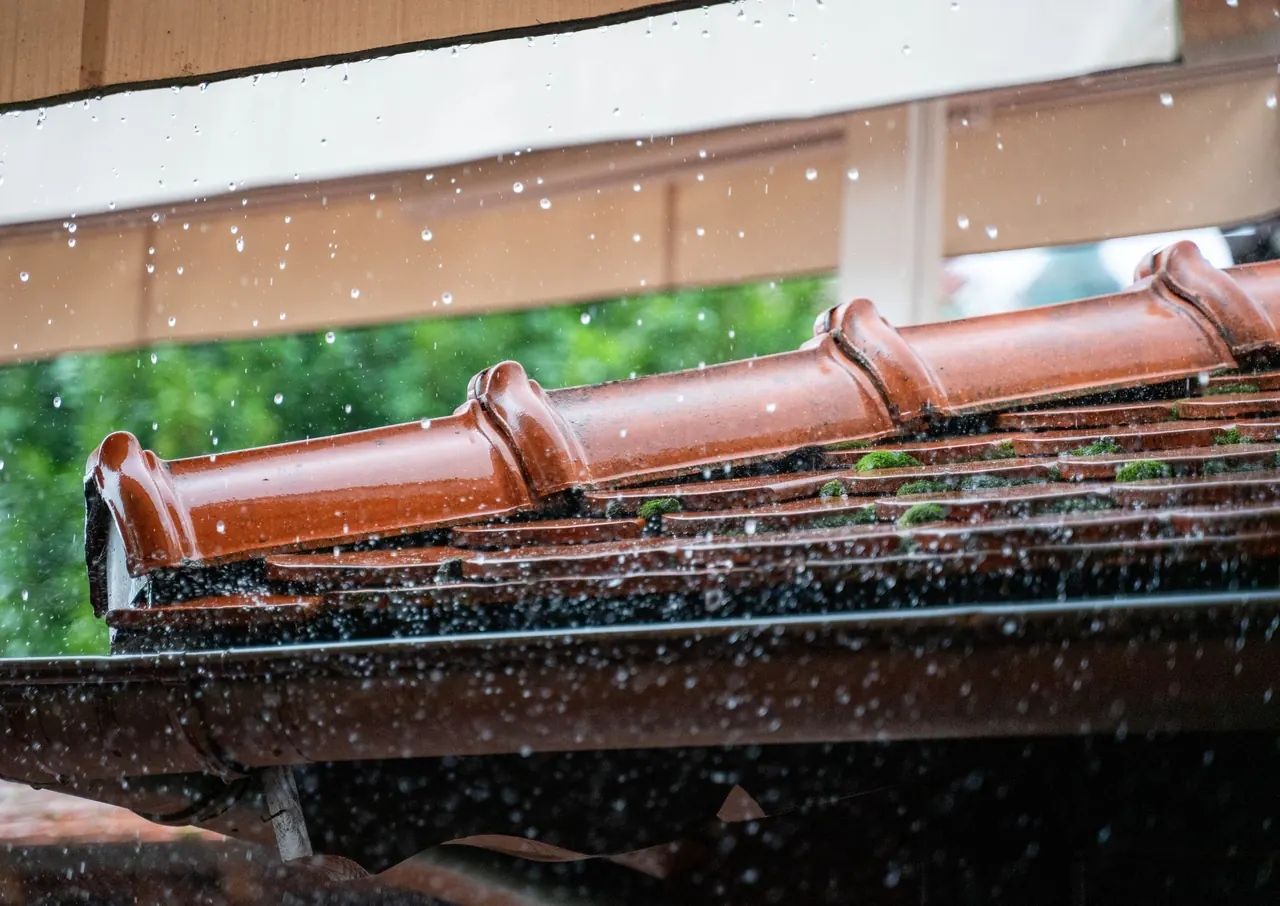
The roofs make a difference to what happens next. On the slate cottages along Leatherhead Road, a strong blow often finishes off nails that were already rusted, so several slates can go at once from one slope. On the 1950s houses on Woodview and Fairoak Lane, the clay pantiles are single-lap, so a single lifted tile can let in a surprising amount of rain. Older roofs on either may have little or no underlay beneath, which means water reaches the ceiling quickly.
Trees are the other risk. Rushett Common's trees line Leatherhead Road almost all the way to the hamlet, and garden trees and field hedges sit close to many houses. A falling limb can break slates, crack rafters or punch through the flat roof of an extension or garage.
What to do while you wait
Call 0330 133 4111. We answer at any hour. Tell us what you can see: where the water is coming in, whether anything is still falling, and roughly which part of the roof is affected.
Stay off the roof and off ladders, however small the damage looks. Move furniture and valuables away from the drip and put a bucket under it. If slates or tiles are coming loose, keep people and cars away from the path or driveway beneath them, and on a house fronting Leatherhead Road keep clear of the verge side too. Take photos inside and, from a safe spot, outside, as your insurer may ask for them.
Slate cottages, Woodview terraces and farm roofs
The first job is to stop more water getting in and remove any danger. On a slate cottage, that might mean refixing or replacing the slates that came off and checking the rest of the slope for others about to follow. On a Woodview terrace, it might mean re-laying lifted pantiles and checking the neighbours' side of the party wall line, since high wind rarely stops at one house. Where a branch has come through, the opening is covered and made watertight and the rafters around it are checked. Loose material that could fall gets taken down.
Farm buildings and outbuildings behind the houses can be damaged without anyone noticing, because many sit near hedges and trees and can't be seen from the road. If a barn or stable roof has lost sheets or covering, tell us on the call what is stored inside.
Sometimes the permanent repair can be finished on the same visit. In high wind or heavy rain the roof is made watertight first, and the permanent repair is quoted and booked once it is safe to work properly. Once things settle, a roof inspection in Malden Rushett will show whether anything else was loosened that you can't see from the ground, and our guide to spotting roof damage after high winds lists what to look for from the garden. Our main emergency roof repair page explains how callouts work.
Frequently asked questions
Can you reach a cottage set back behind the verge on Leatherhead Road at night?
Yes. The cottages near Star Cottages sit well back behind wide grass verges, so ladders go up on your side of the verge, away from the traffic. Leave an outside light on if you can, and tell us on the call where the damage is.
Pantiles have lifted on our Woodview terrace and it spreads onto next door. Who should call?
Either of you can. We make safe the whole damaged area across the party wall line, then each owner deals with their own permanent repair. Let your neighbour know you have called.
Water is coming in near the stack of our farmhouse after high winds. Is it the chimney?
Often. Lead around a stack lifts in high wind, and an old farmhouse may have more than one stack. We check the flashings first, and our chimney repairs page covers the permanent fix.





