



 Google reviews

Roofs nobody walks past
On a suburban street, a neighbour or a passing roofer usually spots a slipped tile within a week or two. Malden Rushett doesn't work like that. Many of the cottages and villas along Leatherhead Road have their backs to open country, the Fairoak Lane semis face fields across the lane, and the farm buildings at Rushett, Byhurst, Oakfield and Glanmire Farms are, in Kingston Council's words, not generally visible from the public road. A barn roof, a stable block or the rear slope of a farmhouse can go a long time without anyone looking at it closely.
That matters most at two moments: when you are buying, and when an older roof is due for a decision about repair or renewal. In both cases the useful thing is a set of close photos of the slopes you can't see from the ground, taken on the same day and dated.
Barns, stables and the farmhouse roofs
Farm roofs here are a mix: tiled farmhouse roofs with big stacks, pitched barns, and outbuildings with flat or low-pitched coverings. On the older pitched roofs we look at valleys and stack junctions, which are awkward to reach and tend to hold leaves from the hedges. On the low-pitched and flat ones we look for splits, ponding, lifted edges and tired upstands where a lean-to meets a wall.
Outbuildings can be added to the same visit as the house. If a building is used for animals or stores, tell us when you book so we can plan around it.
The slopes behind the cottages and on Woodview
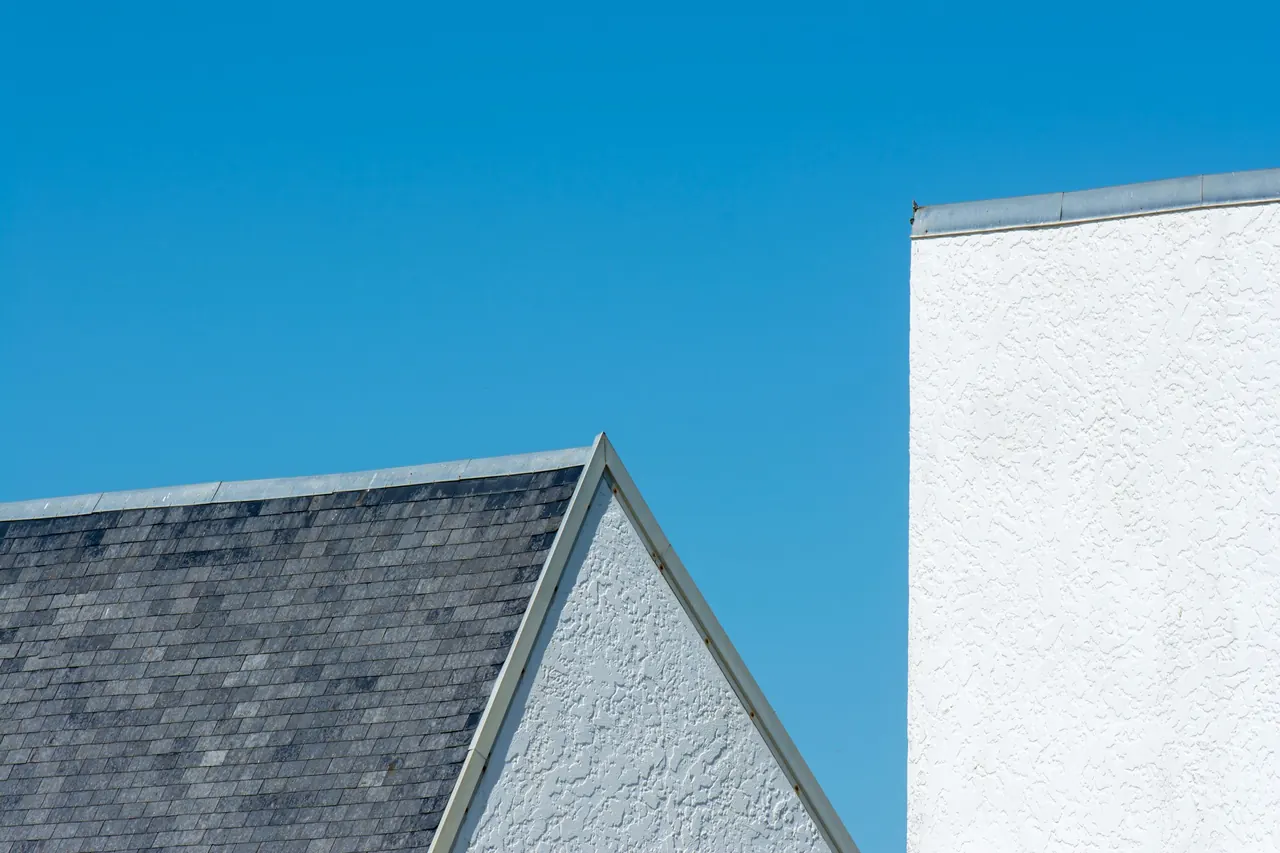
Slate at the back of the Leatherhead Road cottages. On Victorian slate, we look for slates that have slid, the ridge, and the flashings where the roof meets a gable or a higher wall. Rear slopes facing the fields take more weather than the front, so the two halves of one roof can be in different states.
Pantiles on Woodview and Fairoak Lane. The 1950s houses here have clay pantiles. We look for cracked or lifted tiles, mortar falling out of the verges and ridge, and gaps along the bottom course. A pantile roof that has never been re-covered may have early bitumen felt under it, or none, and only the loft tells you which. On a terrace, the photos also show the state of the neighbours' slopes either side, which helps if you are planning work together.
The method is simple. Josh flies the drone over each slope, the ridge, the valleys, chimneys and gutters, so nobody has to walk on fragile slate or old pantiles, and we check the loft where there is access for damp staining, wet insulation and rotten battens. On a gusty day out in the open we rearrange the flight rather than take a chance. Simranjeet, our Roofing Surveyor, goes through the findings with you. The main roof inspection page sets out each step.
For a sense of cost, MyJobQuote's roof survey guide lists drone surveys at £200 to £350 nationally, which is a published guide figure to compare against scaffold hire for a single look.
Before you exchange on a house here
A roof inspection is not a replacement for a lender's valuation or a RICS building survey, and it doesn't try to be. What it adds is a close look at the slopes a surveyor on the ground can only see from a distance. If you are buying, our guide to checking a roof before buying a house lists the questions to ask the seller. If the photos show slipped slates or a loose ridge, our roof repair service in Malden Rushett picks up from there.
Frequently asked questions
Can you inspect a barn or stable block on a farm south of Rushett Lane as well as the house?
Yes. Outbuildings can be added to the same visit. Tell us how to reach them when you book so we can plan the flight and any ladder work.
Is it worth checking a 1950s pantile roof on Woodview that isn't leaking?
Often, yes. A roof still on its original covering may be close to needing work even if nothing is coming through yet. An inspection tells you whether you have years left or should start planning a re-roof with the neighbours.
The cottages are set back behind the grass verge. Does that make inspection harder?
Not with a drone. Distance from the road makes the roof harder to judge from the pavement, but the drone flies from your garden and photographs every slope close up.
Our back slope faces the fields and the front looks fine. Should we still get it checked?
If the house is on the edge of the hamlet, yes. The side facing open ground takes the wind and rain first, so it is common for the rear slope to need attention years before the front.





