



 Google reviews

Out of sight behind the road
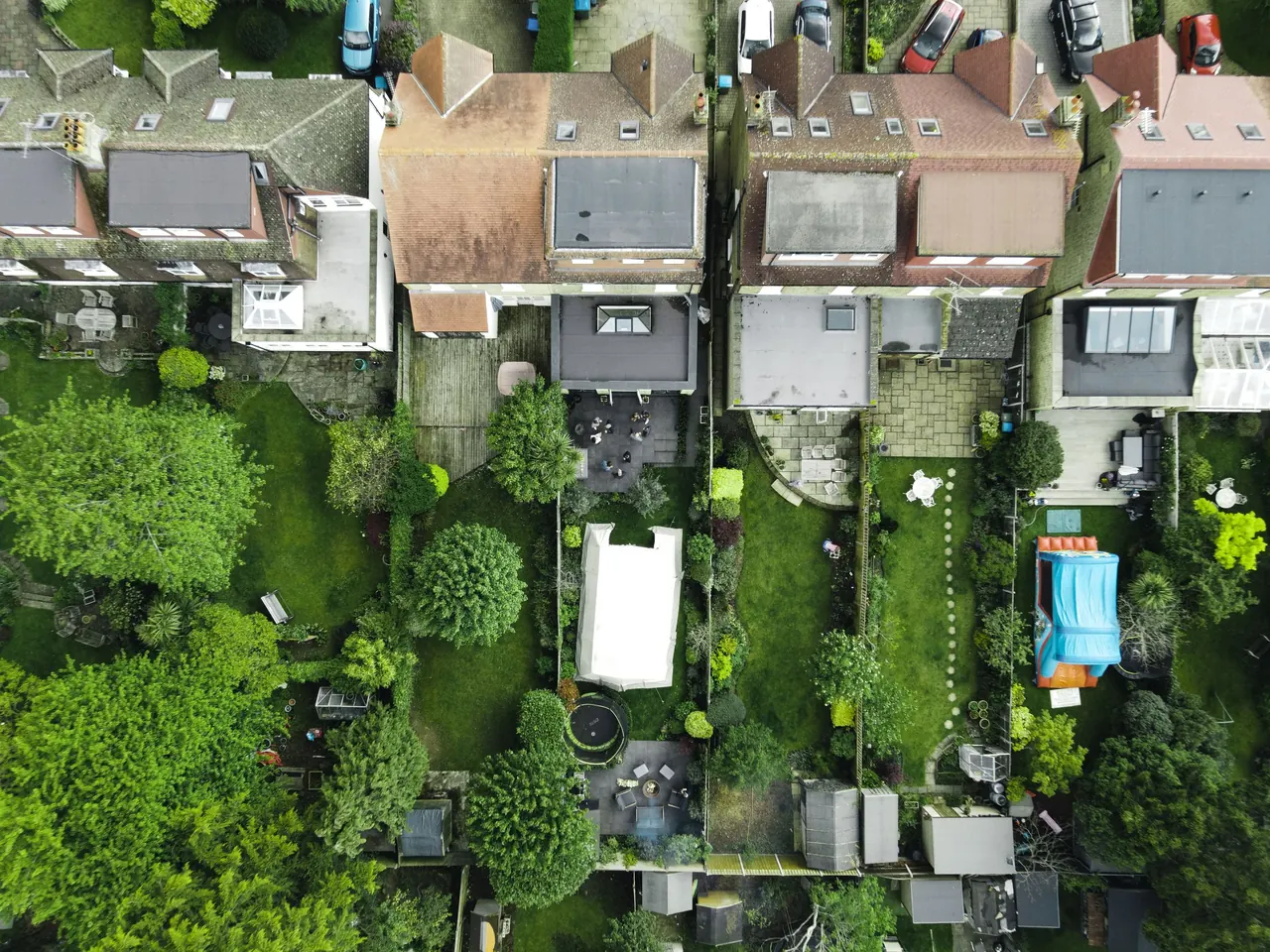
Kingston Council notes that the farm buildings at Rushett, Byhurst, Oakfield and Glanmire Farms, south of Rushett Lane and Fairoak Lane, are not generally visible from the public road. The same goes for much of what sits behind the houses: if you have a garage, a workshop, a stable or a single-storey rear extension with a flat or very low-pitched roof, the chances are nobody sees it except from an upstairs window.
Those roofs get less attention than the house. Older ones were often covered in single-layer mineral felt and then left. By the time a leak shows on the workshop bench or the stable floor, the deck underneath has often been wet for a while.
Leaves, shade and slow drying
Woodland is never far away. Rushett Common's trees line Leatherhead Road, Jubilee Wood and Sixty Acre Wood are close by, and field hedges and garden trees overhang many outbuildings. Leaves and twigs collect against upstands and around outlets, hold water against the covering and grow moss. A roof in shade dries slowly after rain, so a small split stays wet for days rather than hours.
The faults that follow are fairly consistent:
- Ponding where a deck has sagged or an outlet is choked with leaves. Our guide to water pooling on a flat roof explains when a puddle becomes a problem.
- Blistered or cracked felt on older garage and outbuilding roofs, after years of sun and frost.
- Failed upstands where an extension roof meets the house, especially against the rendered walls of the Leatherhead Road cottages.
- Lifted edge trims on roofs exposed to wind off the open fields.
- Soft decking that flexes underfoot, which means water has been getting in for some time.
If a roof is sound apart from one split or one tired upstand, a repair is usually enough. If it leaks in several places, is blistered across its surface or the deck is soft, re-covering is the better spend, because patching over rotten boards only moves the leak along. On a re-cover, the old covering comes off, damaged decking is replaced, and the new covering goes down with proper falls to the outlet or gutter, finished with new trims and flashings. Under trees, the falls and a clear outlet matter more than the choice of covering.
That choice is between GRP fibreglass, which gives a hard-wearing seamless finish, EPDM rubber, which goes down in large sheets with very few joints and suits bigger outbuilding roofs, and modern multi-layer torch-on felt. Our main flat roofing page compares them. For scale, MyJobQuote's rubber roofing guide gives a published national figure of around £1,050 fitted for a typical EPDM roof of about 17.5m².
Rebuilding rather than re-covering
Re-covering an existing roof is maintenance. Pulling down a tired garage or outbuilding and building a new one is different here, because Malden Rushett is washed over by the Green Belt. National policy allows a replacement building where it is in the same use and not materially larger than the one it replaces, and a flat roof keeps the height down. Our roof installation page for Malden Rushett goes into that, and Kingston Council gives the formal answer.
Frequently asked questions
Can you re-cover a stable roof on a farm south of Rushett Lane?
Yes. If the building is in use, we talk through timing with you first. Torch-on felt involves a flame, so on a stable or a barn full of hay or straw, GRP or EPDM is usually the safer choice.
Can you see the garage roof at the back of a Fairoak Lane plot before quoting?
Yes. If it can't be reached safely from a ladder or seen from an upstairs window, the drone photographs it, so we can show you the splits, ponding and edges before we price anything.
The flat roof on our Leatherhead Road cottage extension leaks where it meets the render. Is it the roof?
Often it is the upstand or the flashing above it rather than the roof itself. Water running behind render can travel down and come out at the junction. We check the flashing and the render line before re-covering anything.





