



 Google reviews

Reading the overflow from a Hackbridge garden
Most Hackbridge homes are interwar semis, and where the roof is hipped there is gutter on three sides, with two or three downpipes taking the whole roof. When one of those blocks, the water has nowhere to go but over the edge, and on a hipped roof it often spills at a corner, where two slopes feed the same stretch of gutter.
Before anyone goes up a ladder, the overflow itself says a lot:
- Water spills along a stretch, but the downpipe below still runs. The gutter is choked between the overflow and the outlet, or it has dropped there and holds a pool.
- Water spills at the outlet and the downpipe stays dry. The outlet or the swan neck just below the eaves is blocked. Swan necks have two tight bends, and leaves and moss stop in them.
- The downpipe fills and water backs up out of the joints. The blockage is low down, at the shoe or the bend into the ground.
- Water spills only in the heaviest rain. The gutter or outlet may simply be too small for the roof above it, which is a fitting problem rather than a blockage.
Telling these apart matters because they are different jobs. Clearing the gutter does nothing for a choked swan neck, and rodding a downpipe does nothing for a gutter with a sag in it.
Swan necks, shoes and pipes into the ground
On the interwar semis many back downpipes run straight into the ground or into a gully. A pipe that runs into the ground can block at the bend below the surface, where silt from the roof settles. We clear it from the top and the bottom, rodding or flushing it where it is blocked lower down, and run water through until it flows freely.
If the blockage turns out to be below ground in the drain itself, past the bottom of the pipe, that is drainage work rather than guttering, and we say so rather than guessing.
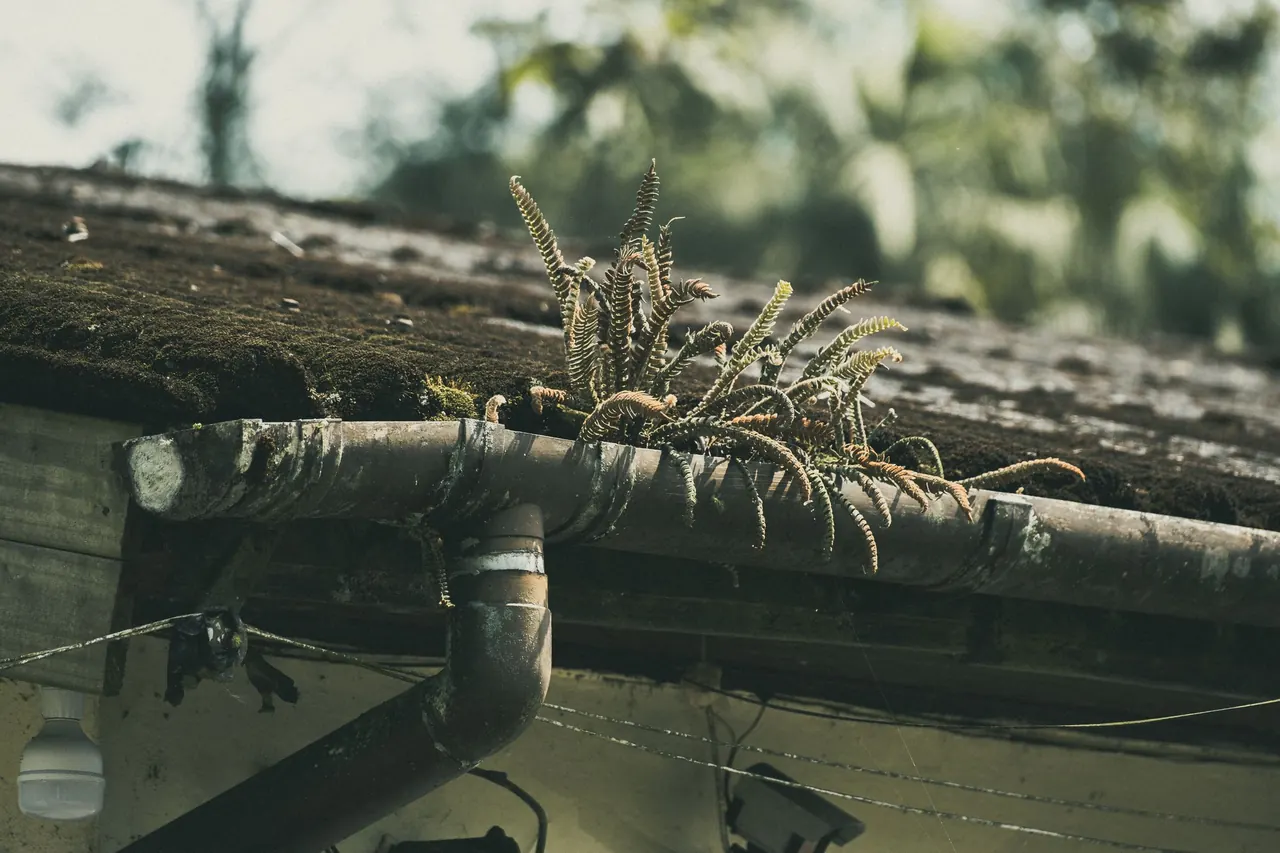
The debris itself is usually moss and grit washed off old tiles, plus leaves on houses near the plane trees on the Green. If leaves are your problem every autumn, a planned gutter cleaning visit in Hackbridge is the cheaper answer.
Low spots that bring a blockage back
A blockage that keeps coming back in the same place usually has a cause beside the debris. When a bracket fails or a fascia moves, a low spot forms in the gutter, water sits in it, and silt settles there each time it rains. Clearing it without resetting the fall just books the same visit for next winter.
So after clearing, we look at what the blockage has done and why it formed: bent brackets, cracked joints, a soaked fascia, or a sag that needs the fall resetting. Where joints or brackets need more than a quick fix, our Hackbridge gutter repairs cover them, and if the fascia behind has gone soft, see fascias and soffits in Hackbridge.
For a plain clear of all the gutters on a house, front and back, Which?'s cost guide gives £75 to £350 excluding VAT. Rodding a downpipe or resetting a sag comes on top of that.
Frequently asked questions
Water pours off the corner above our back door on Hackbridge Road in every storm. Where is it blocked?
Usually at the outlet in that corner or in the downpipe below it. If the downpipe stays dry while the gutter overflows, the pipe or swan neck is blocked. If the pipe runs but the corner still spills, the gutter has probably dropped there. We check both.
We live near Mullards Close, which flooded from the Wandle in 2024. Will clearing our gutters help?
Not with river flooding, which no gutter can affect. What a clear gutter does is put your roof's water into the drain instead of at the foot of your own wall, which keeps the brickwork drier.
The downpipe on our Hackbridge semi goes straight into the ground and the gutter above it overflows. Can you clear that part?
Yes, as far as the bend at the bottom of the pipe. If the blockage is further on, in the drain itself, we tell you so you can call a drainage firm.





