



 Google reviews

Hips, battens and felt on the Kingsmead Avenue pairs
The curved avenues east of Red Lion Road were built in the years after the Kingston bypass opened in 1927, when about six and a half miles of new residential road and some 2,000 houses followed it. On a hipped semi of that age, such as the pairs on Kingsmead Avenue, each half of the pair has a front slope, a back slope and a hipped side slope under a shared ridge, with a valley wherever a bay or back projection joins it.
Replacing that roof is more work than replacing a gable. Each hip needs its tiles cut to the angle, fixed, and capped with bedded or dry-fixed hip tiles, and the hip irons at the foot of each one are renewed. Underneath, the job usually finds felt that has turned brittle and battens softened where the felt sagged. Some of these roofs have been re-covered once already, and across the country many interwar houses were re-tiled in concrete interlocking tiles in later decades, so what comes off is not always what went on.
The signs that the covering as a whole is finished are tiles slipping in several places at once, nails rusting through, felt that tears when touched in the loft, and repairs that used to last years lasting a season. Our guide to deciding between a repair and a full replacement covers those signs in more detail. For budgeting, Checkatrade's roof replacement guide gives a national guide range of £9,250 to £18,000 for a hip roof of about 64 square metres.
Sunray clay roofs: what goes back on
The Sunray Estate came later, mostly at the end of the 1940s and in the early 1950s, so its roofs are younger by a generation. Kingston's character study describes plain clay-tiled roofs with curved-tile chimney details over tile-hung, jettied first floors, and says the estate would be worthy of status as a local area of special character. It is not designated, and like-for-like re-roofing is normally maintenance that needs no planning permission.
The look of each terrace still rests on those small clay tiles. A single house re-covered in large concrete tiles would stand out along Sunray Avenue or Warren Drive for decades. Clay costs more than concrete and lasts longer, so we price both and you can see the difference in money as well as appearance.
Ellerton Road and Pyne Road: what lies under the old covering
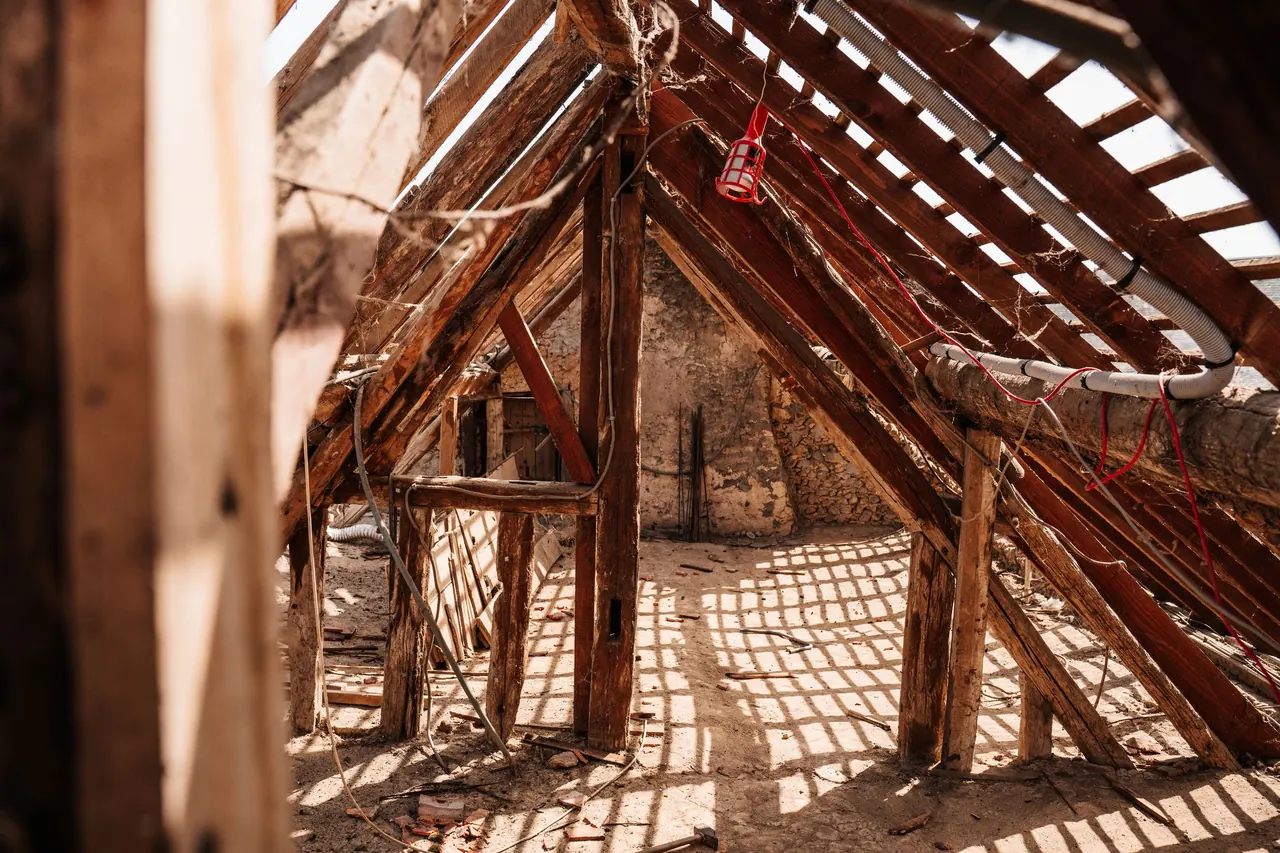
The Victorian and Edwardian houses around Ellerton Road and Pyne Road began going up at the end of the nineteenth century, and their roofs have usually been patched many times. A replacement here is often as much about what is under the covering: a split rafter, a wall plate rotted at one end, or a back addition with its own small roof that leaks where it meets the main one. Stripping back lets those be dealt with properly instead of tiled over.
Gutters, boards and the stack on the same scaffold
A re-roof means scaffolding, and scaffolding is the expensive part of reaching anything at roof level. It is the right moment to renew the gutters and the boards behind them and repoint the chimney. Renewing most of a roof can bring in Building Regulations insulation requirements where practical, which we explain at the quote stage.
Our main roof replacement page covers coverings and lifespans. If the boards at the eaves are tired, see fascias and soffits in Tolworth, and if a loft conversion is on the cards, our Tolworth roof installation page covers the gable and dormer side.
Frequently asked questions
Our Sunray house still has its original clay tiles. Is it worth putting clay back?
On a Sunray terrace, usually yes. The estate is not protected, so the choice is yours, but a new clay roof keeps the house in step with its neighbours and has a long life. You get prices for clay and concrete so you can decide on facts.
What happens to the tile hanging on the front of a Sunray house during a re-roof?
Usually nothing. The hanging tiles on the first floor are a separate covering. We check them from the scaffold and repair any that are loose, since the access is already there.
Next door's half of our Kingsmead Avenue pair is not being re-roofed. Does that cause problems?
It is common. The new roof stops at the party wall, and the join along that line is made so the two coverings meet neatly and stay dry. If your neighbour re-roofs later, their side meets yours the same way.
Will a new roof on our 1930s semi need extra insulation?
Often it will, because renovating most of a roof brings in the insulation rules where it is practical to add them. We tell you what applies to your house when we quote.





