



 Google reviews

What wears out under a Wates roof
Wates were active builders west of the railway between the wars, and the estate around Wendover Drive is recorded as designed for them by Kenneth Bland. Houses put up by one firm over a few years tend to have roofs put together in much the same way: clay or concrete tiles on timber battens, iron nails, mortar-bedded hips and ridges, and in many cases no underlay at all, or an early bitumen felt.
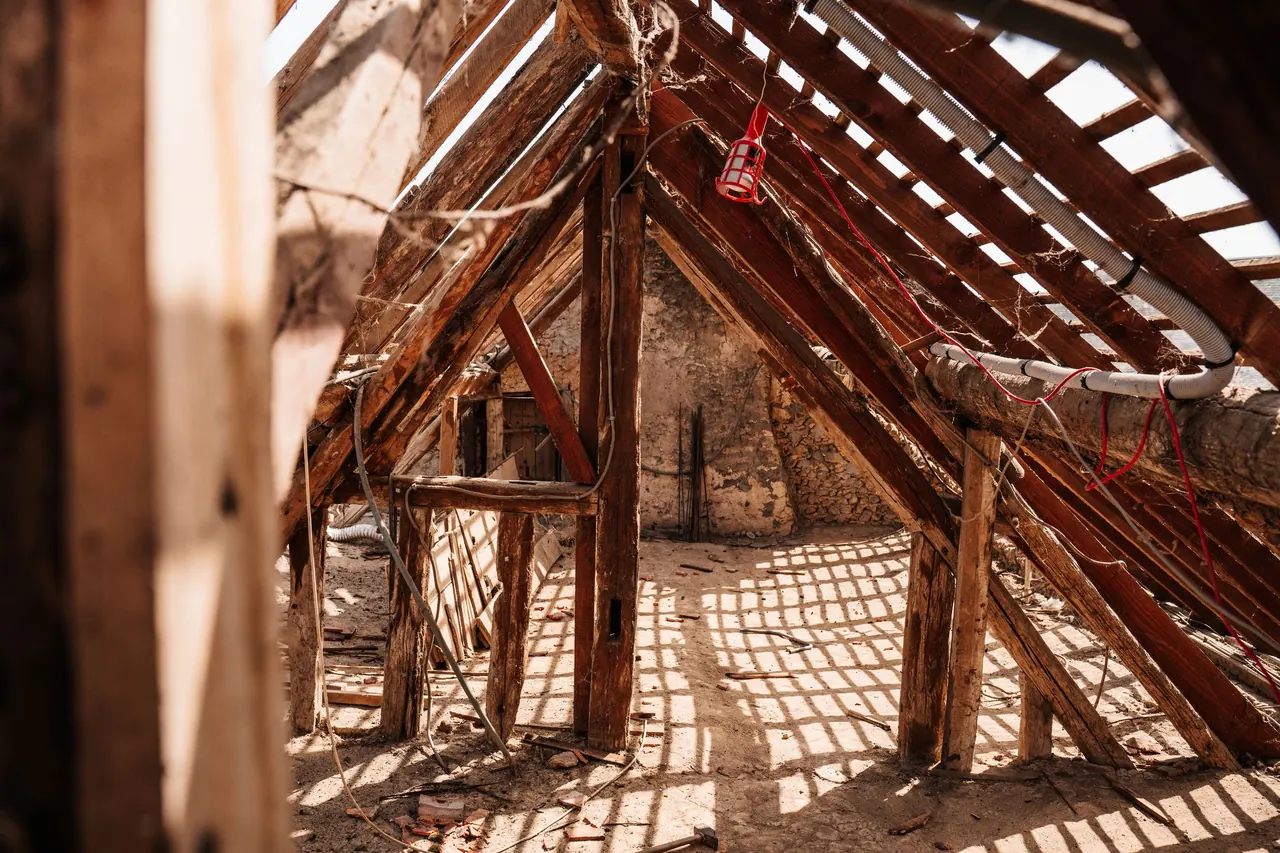
The tiles are rarely what fails. What wears out is everything holding them up: nails rusting through so tiles slip in a new place every winter, battens gone soft or bowed between the rafters, and hip bedding failing along every run rather than just one. A single fault in one place is a roof repair. When the loft shows the same wear across the whole roof, patching it usually costs more in the long run than doing it once.
The rebuilt stretch of Motspur Park
Not every house on these streets is the age it looks. On the morning of 3 July 1944 a V-1 flying bomb came down near 45 Motspur Park, the road that gives the area its name. Seven houses were destroyed and others nearby were badly damaged, and the sites were later rebuilt.
So on that stretch, a roof might be a post-war rebuild, a pre-war roof patched after blast damage, or something in between, sitting beside an untouched Wates roof two doors along. Blast repairs may also have used whatever tiles could be found at the time. That is a good reason to look in the loft before deciding anything, and a drone survey of the outside will show where tiles change colour or profile across a roof. Our roof inspection covers both.
Next door, the party line and the arch
The arched semis of Blakes Avenue are linked to the next pair by a curved arch over the side passages, so a re-roof on one house touches two neighbours: the other half of the semi, and the house next door that shares the arch.
At the party wall, the new tiles finish against the neighbour's old roof along the hip or the ridge. That joint needs the new membrane lapped and the ridge or hip bedded across the line, so it does not become the next leak. At the side, the arch and its flashings are protected while the scaffold is up, and any flashing between the arch and your wall is renewed with the roof.
On a row where the houses still match, the tile choice matters. Concrete interlocking tiles cost less and come in profiles that can sit well beside an old roof. Clay tiles give a traditional finish and suit a row where neighbours still have clay, but cost more. It is worth holding a sample against your neighbour's roof before deciding. The main roof replacement page describes each stage of the work.
Where a house has tile-hung bays or gables, as on Wendover Drive and Glebe Gardens, the scaffold for a re-roof is the right moment to refix or re-hang them too.
Paved fronts, skips and the cost
How long a re-roof takes depends on the size of the roof, the weather and how much timber needs repairing. The old covering comes off back to the rafters, timbers are checked and repaired, and a breathable membrane, new battens, tiles, hips, ridge and lead go on. Gutters and fascias are usually renewed while the scaffold is up.
Where front gardens have been paved for parking, it helps to agree in advance where the skip and the tile pallets will stand, so you can still get the car off the drive at the end of the day.
As a national benchmark, Checkatrade's roof replacement cost guide gives an average of around £8,000, with most jobs between £4,000 and £19,000.
East of the Beverley Brook, the streets are in Merton; our West Barnes roof replacement page covers those houses.
Frequently asked questions
Our house is on the bombed stretch of Motspur Park. Is the roof younger than our neighbours'?
It may be, or it may be a pre-war roof repaired after the blast. The loft usually tells us: different battens, nails or felt from the houses either side. We check before quoting.
Can the tile-hanging on my Wendover Drive house be redone with the roof?
Yes. With the scaffold up, the vertical tiles can be stripped and re-hung on new battens, reusing sound tiles where possible.
What happens to the arch when one half of a Blakes Avenue pair is re-roofed?
It stays as it is, but it is protected during the work, and the flashing where it meets your wall is renewed if it is worn.
Next door on Hollington Crescent is not re-roofing. Will the join between our roofs show?
Some difference in colour is likely while the new tiles are fresh, so choosing a profile and colour close to next door's matters more than on a detached house. The join itself is bedded across the party line so it stays watertight.





