



 Google reviews

The post-war terraces on Wellfield Road
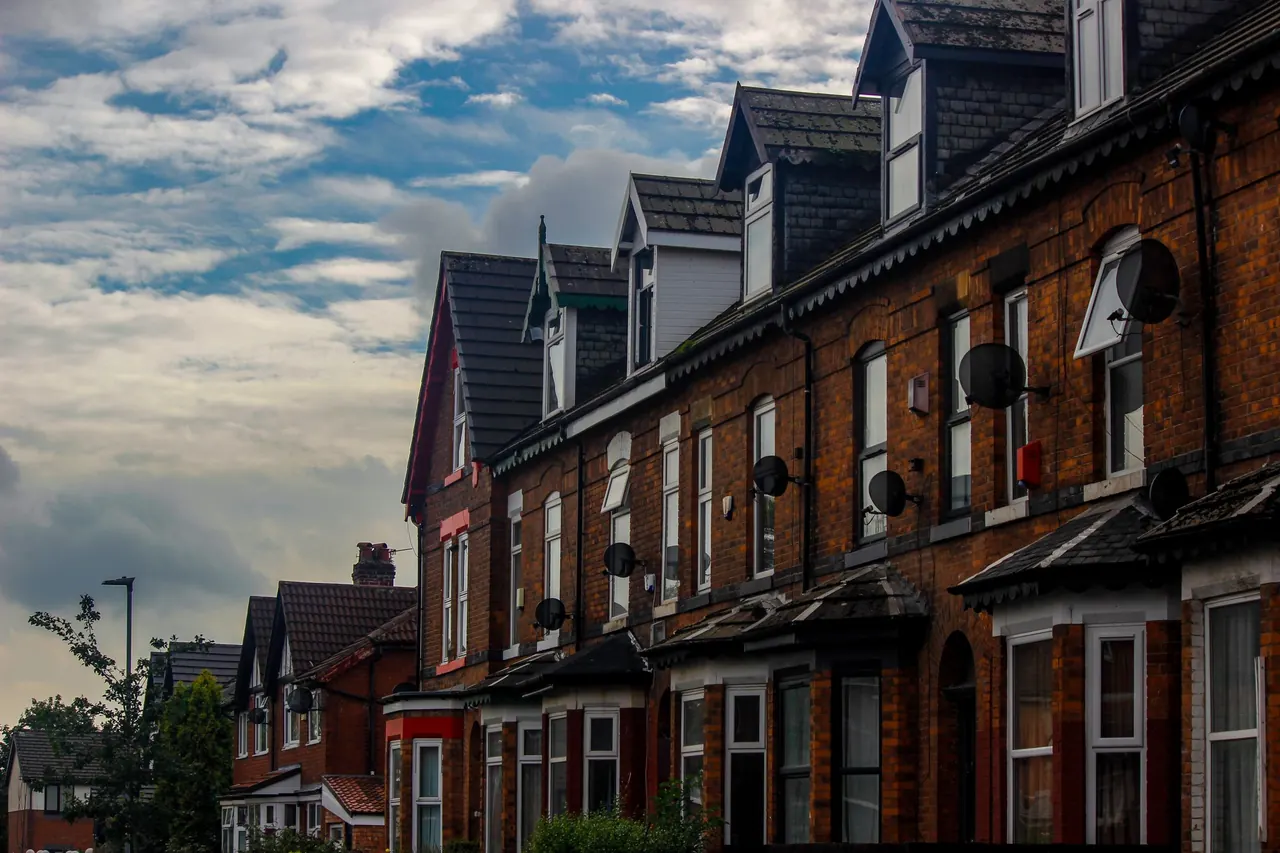
Lambeth's Sunnyhill Road appraisal records that Streatham was badly scarred in the Second World War, with an estimated 80 percent of its buildings damaged or destroyed, houses on Sunnyhill Road among them, and that it took more than a decade to repair or replace much of the housing. On Wellfield Road the appraisal lists two groups of post-war terraces, one on each side of the road, two storeys in brick and render under pitched cement fibre roofs, with simple chimney stacks and recessed doorways that copy the Victorian terraces nearby.
These houses are a different job from the cottages either side. The appraisal's advice on black cast iron gutters, half-round or ogee, is written about the historic buildings, and it counts the post-war terraces as neutral rather than as part of the historic character. That leaves more room to choose a modern system, and a dark coated aluminium gutter formed to the length of each front is a sensible fit for a plain two-storey eave.
On a terrace, each house's gutter stops at the party line and meets the neighbour's. A seamless run covers your own front in one piece, from the party line to the outlet, and the joint at the boundary is made to whatever next door has. Picking a profile and colour close to the neighbours keeps the row looking like one roofline.
Later houses among the Sunnyhill Road cottages
Sunnyhill Road has its own twentieth-century additions. The same appraisal lists a row of later double-fronted houses in yellow and red brick with hipped roofs, built to echo the older cottages, and further up a pair of 1950s brick houses with cement pitched roofs. On Farm Avenue there is a small twentieth-century infill house built hard up to the pavement.
A hipped roof has eaves on more than one side, so a seamless system there still has joints at each corner. What it loses are the unions every few metres along the straight lengths, which on an older sectional gutter are usually where the drips start. On a double-fronted house with a long front eave, that is a real reduction in the number of seals that can fail.
Pinkerton Place, Fishers Close and Wellington Mews
West of the High Road, the Streatham Park estate has later housing of its own. The 2023 Streatham Park and Garrads Road appraisal describes Pinkerton Place as a 1980s development of detached blocks in stock brick with clay tiles, built where Nos. 61 to 65 Tooting Bec Gardens stood until they were demolished after the war. Off Garrads Road, Fishers Close is a late twentieth-century group of tall three to four storey red brick terraces with rendered canted bays, built in the grounds of Saxoncroft House. Wellington Mews, reached from Woodbourne Avenue, is a group of two-storey red brick terraces with clay tiled roofs and dormers around a courtyard.
Each of these asks something different of a gutter. On the tallest terraces at Fishers Close, every visit to reseal a joint means tall ladders or access equipment, so fewer joints along the eaves means fewer of those visits over the years. Coated aluminium also needs no painting, which matters three or four floors up. At Wellington Mews the dormers break the eaves into shorter lengths, so the gain is smaller and we will say so when we measure. At Pinkerton Place, where the appraisal's entry describes hipped roofs with dormers, the blocks fall somewhere between the two.
Before any new gutter goes up, we check the boards it will be fixed to along the whole length. A one-piece run is only as straight as the fascia behind it, and if the timber has softened, our fascia and soffit work in Streatham deals with it first. How the runs are measured, formed and fixed is set out on our main seamless gutters page.
The Victorian and Edwardian houses next to all of these are another matter. On a Sunnyhill Road cottage or a Queen Anne house on Thirlmere Road, with bays, porches and gables breaking the eaves into short lengths, seamless would save few joints, and the appraisals for both conservation areas favour cast iron on the historic fronts. For those, see gutter installation in Streatham.
Frequently asked questions
Our house is one of the post-war terraces on Wellfield Road. Can our gutter be seamless if next door keeps theirs?
Yes. Your run is formed to the length of your own front and stops at the party line, where it is joined to the neighbour's gutter. Choosing a similar profile and a dark colour helps the join look tidy from the street.
Would seamless gutters make sense on the tall terraces at Fishers Close?
They are one of the better fits in central Streatham. The eaves are high and costly to reach, so having joints only at corners and outlets cuts down the number of places that might need attention later. If the block is managed, the managing agent will usually need to agree the work and the colour.
Is aluminium acceptable on a post-war house in the Sunnyhill Road conservation area?
Lambeth says the conservation area has no Article 4 Direction, and replacing gutters on a house does not normally need permission. The appraisal's preference for cast iron is aimed at the historic cottages rather than the post-war terraces. Flats are treated differently, so if your building is divided or you are unsure, check with Lambeth before ordering.





