



 Google reviews

Buying a slate cottage on Sunnyhill Road
The cottages that climb Sunnyhill Road east of the High Road were built in pairs from the 1860s on, in stock brick with natural slate. Lambeth's Sunnyhill Road appraisal describes hipped roofs along the north side and gables on the south, and says many still have their slate. It also notes that some were re-covered in concrete tiles.
Each of those histories leaves a different thing to look for. On an original slate roof, the slates themselves can last well over a century, but the nails holding them rust, slates slip one at a time, and the mortar under the hip tiles cracks. On a roof that has gone over to concrete, the question is the timber: concrete tiles are heavier than the slate the rafters were cut for, so the loft is where a sag or a cracked purlin shows. On Farm Avenue and the north side of Wellfield Road, some houses hide a London roof behind a flat parapet, and the central valley is invisible from anywhere on the ground.
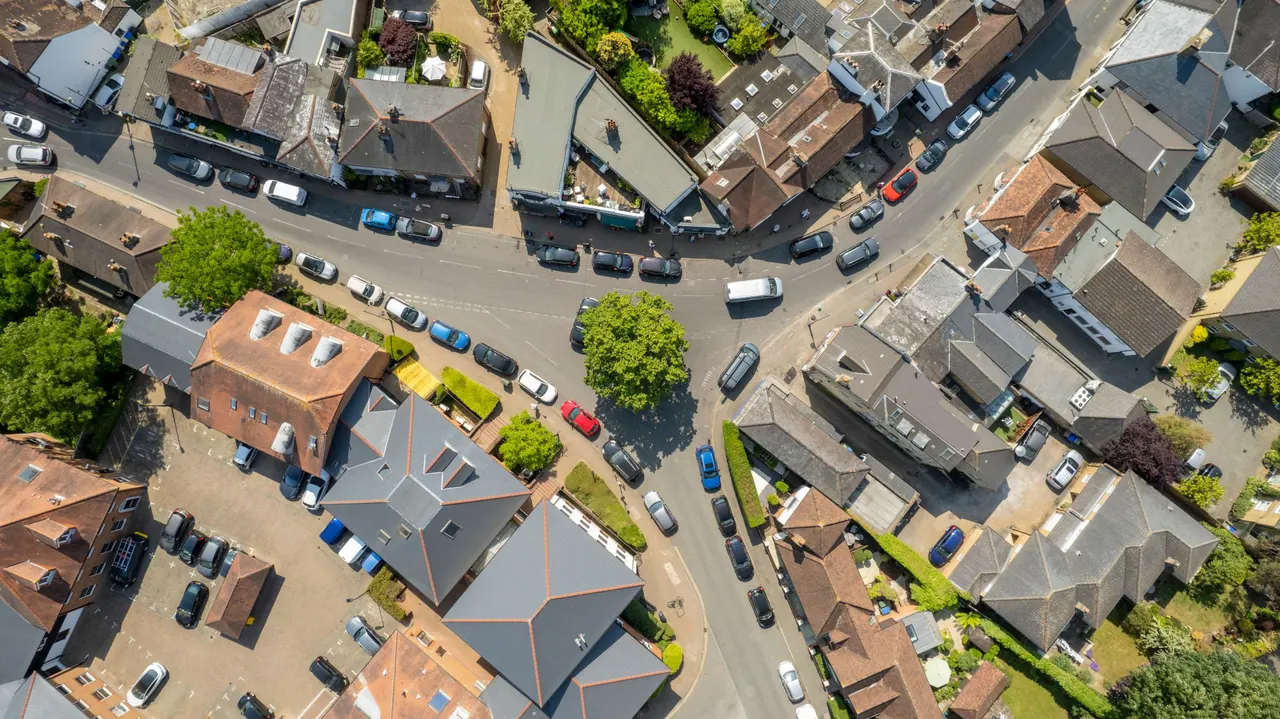
Josh, our Roof & Guttering Apprentice, flies the drone along each slope, and where there is a loft hatch we look inside as well, for damp on the rafters, daylight round a stack or nail tips rusting through. Simranjeet, our Roofing Surveyor, goes through the findings with the team. You get the photos with a short explanation of what each one shows and what, if anything, needs doing before or after you buy.
Clay roofs and hanging tiles on the Streatham Park estate
West of the High Road, the houses on Riggindale, Rydal and Thirlmere Roads went up from the late 1870s in the Queen Anne style. The 2023 Streatham Park and Garrads Road appraisal records clay tile as the main covering, with decorative ridges, terracotta finials and fishscale hanging tiles on the gables, and notes that some roofs have been redone in concrete tiles.
A semi like this is a busy roof. Gables mean valleys, valleys collect leaves from the mature gardens, and a valley that holds water rots its lining from the top. Hanging tiles on the gable faces are nailed to battens on the wall, so a few missing ones high up let rain onto timber nobody can see from the street. Finials and ridge tiles sit in mortar that shrinks. None of that shows on a set of estate agent's photos taken from the front path.
For a buyer, the useful part is knowing what is sound, what needs watching and what needs fixing, so the last of those can go into the negotiation. If the inspection finds a fault, slipped tiles or a cracked ridge usually go to a roof repair in Streatham, and a stack that needs work goes to our Streatham chimney repairs.
A flat over a shop on Queens Parade
Many of the High Road shops have flats above. Lambeth's High Road conservation statement describes Queens Parade, Nos. 227 to 243, as a four-storey Queen Anne revival row by Wheeler and Hollands that has hardly changed, with original decorative pargetting still in place under the eaves of some houses and under the gables of others.
Pargetting is moulded plaster, and it is only as dry as the gutter and the roof edge above it. If you are buying one flat, ask for the whole roof to be looked at rather than the part over your rooms, since a blocked gutter over the flat next door can soak the plaster and the walls of both. Our guide to a roof inspection before buying lists what to ask the seller, including who is responsible for the roof under the lease.
Gleneldon Mews behind the shops
Behind the stretch between Gleneldon Road and Stanthorpe Road runs Gleneldon Mews, a row of one-and-a-half storey brick stables, cart sheds and stores built for the High Road traders and now used mostly by car repair businesses. The same statement says the majority still have their original slate roofs. Slate of that age can crack under a boot, so on the mews the drone does the looking and anyone who does go up works from crawl boards.
For a sense of cost, MyJobQuote's roof survey guide puts a drone survey at around £200 to £350 nationally. The main roof inspection page explains what a full inspection covers.
Frequently asked questions
The Sunnyhill Road cottage I'm buying has concrete tiles. What should the inspection look at?
The timbers as much as the tiles. From the loft we look for rafters that have bowed or purlins that have cracked under the extra weight, and outside we check the hips and the junction with the neighbour's roof.
The Riggindale Road house I'm looking at has tile-hung gables. Are those part of the check?
Yes. Hanging tiles are fixed with nails that corrode just like roof nails, and the drone can get close enough to show loose or missing tiles high up on the gable.
I'm buying a flat above a shop on Queens Parade. What should the inspection cover?
The whole roof, not just the part above your flat: the gables, the gutters above the pargetting, the main slopes, the stacks and any flat roof over a back wing. Ask for the lease too, so you know who pays for which part.
I rent a workshop in Gleneldon Mews. Can you check the slate without walking on it?
Yes. The drone covers the run from above, so nobody needs to stand on the slate to see it. If a fault needs a closer look, it is done from crawl boards and the owner is told what was found.





