



 Google reviews

The bay corner on the Sunnyhill cottages
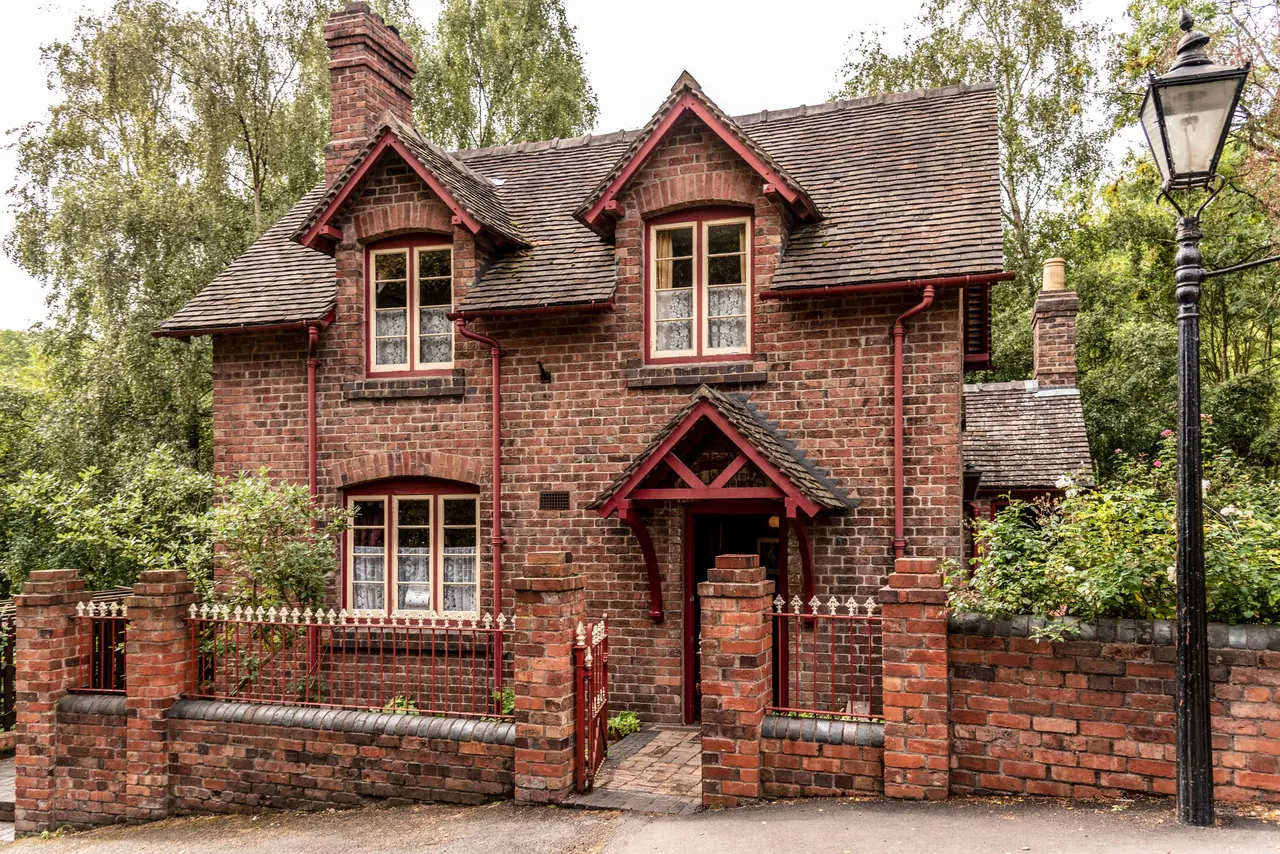
Wellfield Road leaves Sunnyhill Road at the Leigham Arms and curves away, narrow and tightly built. Further along its north side, and along Sunnyhill Road, are Victorian stock-brick cottages with bay windows. Lambeth's Sunnyhill Road appraisal says their rainwater goods were traditionally cast iron, half-round or ogee, painted black, and that in many cases the downpipe was placed beside the return of the bay window so it would hardly be seen.
That was a good choice for looks and a hard one for maintenance. The main gutter turns the corner there, the bay roof drains into the same spot, and the downpipe starts from it, so three pieces of iron and several joints meet in a tight angle against the wall. When one of those joints lets go, water runs down the return of the bay rather than the open front, and the first sign can be damp inside the bay itself.
At that corner we check the outlet and the joint either side of it, the bracket that carries the turn, the top of the downpipe and its first few joints, and the flashing where the bay roof meets the wall above.
Terraces on the south side of Wellfield Road
The south side of the road is different. The appraisal describes later Victorian terraces there in red brick with stock brick elsewhere: two storeys, identical bay windows, recessed entrances and pitched roofs, all repeated along the row with cast stone capitals in a Venetian Gothic style. Along a terrace like that the gutter runs from house to house with an outlet every so often, and a sag in front of one house sends water along into the next.
On these runs the usual repairs are:
- resealing cast iron joints whose old seal has dried and cracked
- replacing brackets that have rusted through, and resetting the run to fall towards its outlet again
- swapping a single cracked length for a matching one in iron
- making a sound joint where a plastic length has been pushed into the old iron with an adaptor
On the front of a conservation area terrace we repair in cast iron rather than dropping in plastic, so the run still looks like one gutter.
Hoppers dated 1909 and 1913
On the High Road, some of the rainwater goods carry their own history. Lambeth's conservation area statement notes that the 1909 date on Nos. 73a to 89 appears on a hopper head, and that the police station's extension on Shrubbery Road is dated 1913 on its hoppers. Pieces like these are worth keeping. A cracked hopper can often be taken down, cleaned, repaired and refitted, and a hopper that overflows is more often blocked or undersized for the roof above than broken.
On tall frontages a downpipe that cracks high up can soak a wall for months before anyone notices, so we follow the pipe all the way down and check the joints at each floor. A drone pass helps on the back of a building where nobody can see the pipe from the ground.
MyJobQuote's gutter repair guide gives about £215 as an average UK repair, and work at height on a High Road frontage costs more. If the iron is rusted through along most of its length, gutter installation in Streatham explains the replacement options, and if leaves and silt are behind the overflow, see blocked gutter repair in Streatham. Our article on water leaking behind a gutter covers the board behind the gutter, while the main gutter repairs page covers uPVC and aluminium systems too.
Frequently asked questions
Damp shows inside the bay of my Sunnyhill Road cottage after heavy rain. Could it be the gutter corner?
It is the first place to check. A failed joint at the corner where the bay roof, main gutter and downpipe meet sends water down the return of the bay. We check each joint there and reseal or replace the part that has failed.
Can the dated hopper on our building on the High Road be saved?
Often, yes. We take it down, clean it, check for cracks, repair it where we can and refit it with a sound joint to the downpipe. If it is beyond repair we tell you before looking for a replacement.
Part of my gutter is cast iron and part is plastic. Can the join be made to stop leaking?
Yes, with the right connector and a properly supported joint. On the front of a house in the conservation area, putting the plastic length back to iron is the neater long-term fix.





