



 Google reviews

A whole new roof on a Crystal Palace house
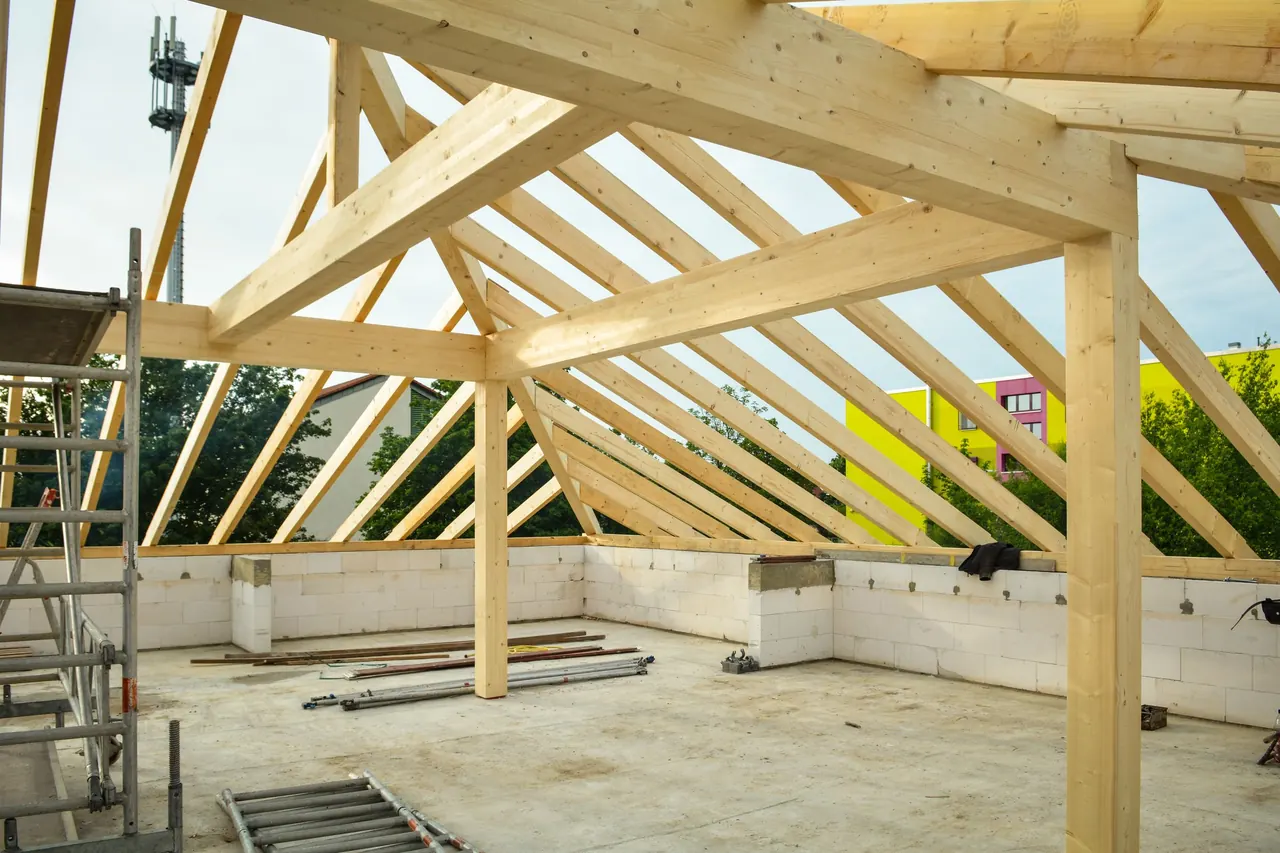
A new roof is a bigger job than a re-cover. It is what a house needs when the structure under the slates has gone as well: rafters split or rotted at the feet, purlins that have dropped, a roof weakened by an old fire or by decades of water getting in at a valley. In that case we take the covering off, your builder or engineer puts the frame right, and we build the new roof up from the timbers.
If the frame is sound and only the slates, battens and felt are worn out, you need a re-roof, not a new roof, and our page on roof replacement in Crystal Palace covers that job. It is cheaper, and on most of the Victorian houses here it is the more likely answer. We tell you which one your house needs once we have looked at it, starting with a drone survey of the slopes and a look in the loft.
The houses vary a lot within a few streets. Croydon's appraisals list natural slate among the traditional materials of the Triangle and of the Church Road Conservation Area, which takes in Fox Hill, though some Church Road villas, such as 271-281, have steeply pitched tiled roofs. The two-storey houses built on Ovett, Brunel and Telford Closes between 1975 and 1981 are a century younger and were built to a 1970s specification. A new roof on one of those goes back to match the rest of its terrace.
For a sense of scale, the Which? roofer cost guide puts a whole new tiled roof on an average three-bedroom house at £7,000 to £21,000 excluding VAT, a national guide figure that it says runs higher in London. A house where the timbers need rebuilding sits at the upper end of that range. Every roof we fit carries our 10 year guarantee.
Rebuilt outbuildings and workshops off Haynes Lane and Carberry Road
Some of the area's 19th century working buildings survive: brick workshops on Carberry Road, a small alley of them on Child's Lane, and workshops round a courtyard on Haynes Lane. When one of these is rebuilt or brought back into use, the roof is often replaced outright.
These buildings were put up for storage and trades, not to carry an insulated roof with a ceiling hung from it. So the first question is whether the walls and wall plates can take the new load. If they cannot, that is work for your builder or engineer first, and we fit the roof once the structure is ready.
A new pitched roof on an outbuilding like this follows the usual order: breathable membrane, battens at the gauge for the slate or tile, the covering, then lead dressed into the brick wherever the roof meets a wall. Low and flat workshop roofs are a different job, and our page on flat roofing behind the Triangle's parades deals with those.
Dormers and roof extensions in the Upper Norwood Triangle
A lot of houses in England can take a rear dormer under permitted development. In a conservation area the permitted development rights for roof enlargements do not apply, and the Triangle and the Croydon side of Fox Hill sit inside the Upper Norwood Triangle and Church Road conservation areas. So any dormer, front or rear, needs planning permission. A like-for-like new roof at the same height and pitch is a different matter and is normally treated as repair.
For the Triangle, Croydon says roof extensions visible from a public road are unlikely to be permitted, mansards and large dormers on street-facing roofs will generally not be allowed, and roof extensions on the two-storey Georgian buildings will generally not be allowed either. The Planning Portal's loft conversion guide explains the national rules, and Croydon's planning team can confirm what applies at your address. Your architect normally makes any application, and we build the roof to the approved drawings.
Our main roof installation page explains the stages in more detail.
Frequently asked questions
The rafters in my Fox Hill house have rotted at the eaves. Do I need a whole new roof?
Not always. Rot at the rafter feet can often be cut out and the ends repaired while the slates are off, which turns the job into a re-roof with timber repairs. If the rot has spread up the rafters or the purlins have sagged, the frame needs rebuilding, and a structural engineer should say how.
I want a dormer at the back of my Haynes Lane cottage. Is that permitted development?
No. Haynes Lane is in the Upper Norwood Triangle Conservation Area, where dormers are not permitted development, so even a rear dormer needs planning permission. The row at 1-11 is also locally listed, which the council takes into account. Talk to Croydon's planning team or an architect before you commit to a design.
Could the roof of a Carberry Road workshop be raised to add a room?
It is possible but hard. Raising a roof that can be seen from the street is the kind of roof extension Croydon says is unlikely to be permitted in the Triangle. A new roof at the same height and pitch is a much easier conversation with the council.
My house on Brunel Close needs a new roof. Does it have to be slate like the Victorian streets?
No. The closes are in the conservation area, but a new roof that matches what the house was built with, at the same shape and height, is the straightforward route. If you want to change the covering or the roof's shape, ask Croydon's planning team first.





