



 Google reviews

What happens when you ring
Our emergency line is open 24 hours a day, 7 days a week. When you ring, tell us what is happening and where. Anything that could fall on people is dealt with first, ahead of a leak that a bucket can hold for now, and the first job on arrival is to bring down or secure whatever could fall.
While you wait, keep people clear of the area under the problem, move belongings away from any water coming in and do not go up a ladder yourself.
Loose slates over the pavement on the main roads
At the southern end of Tulse Hill, the A204, the A205 South Circular and the A215 Norwood Road meet beside the Tulse Hill Hotel, close to the station. A loose slate, ridge tile or chimney pot on a building along those roads is an emergency even if no water is getting in yet, because the risk is to people on the pavement and to traffic. If something is hanging loose over a pavement or a doorway, tell us exactly where it is when you ring.
Further up, the blocks along Tulse Hill and Upper Tulse Hill have their own freeholders. If you are a resident and something is coming off the roof, report it to the council or managing agent straight away as well as keeping people clear.
Tall villas on the hill south of Brockwell Park
The Victorian villas on the south side of Trinity Rise are tall, several of them three storeys over a semi-basement, with chimney stacks and gable ends topped with balls or urns. In a gale, those are the parts of a roof that move first, and a slate falling from that height is dangerous to anyone below. Many of these houses are set back behind deep front gardens, which gives some margin.
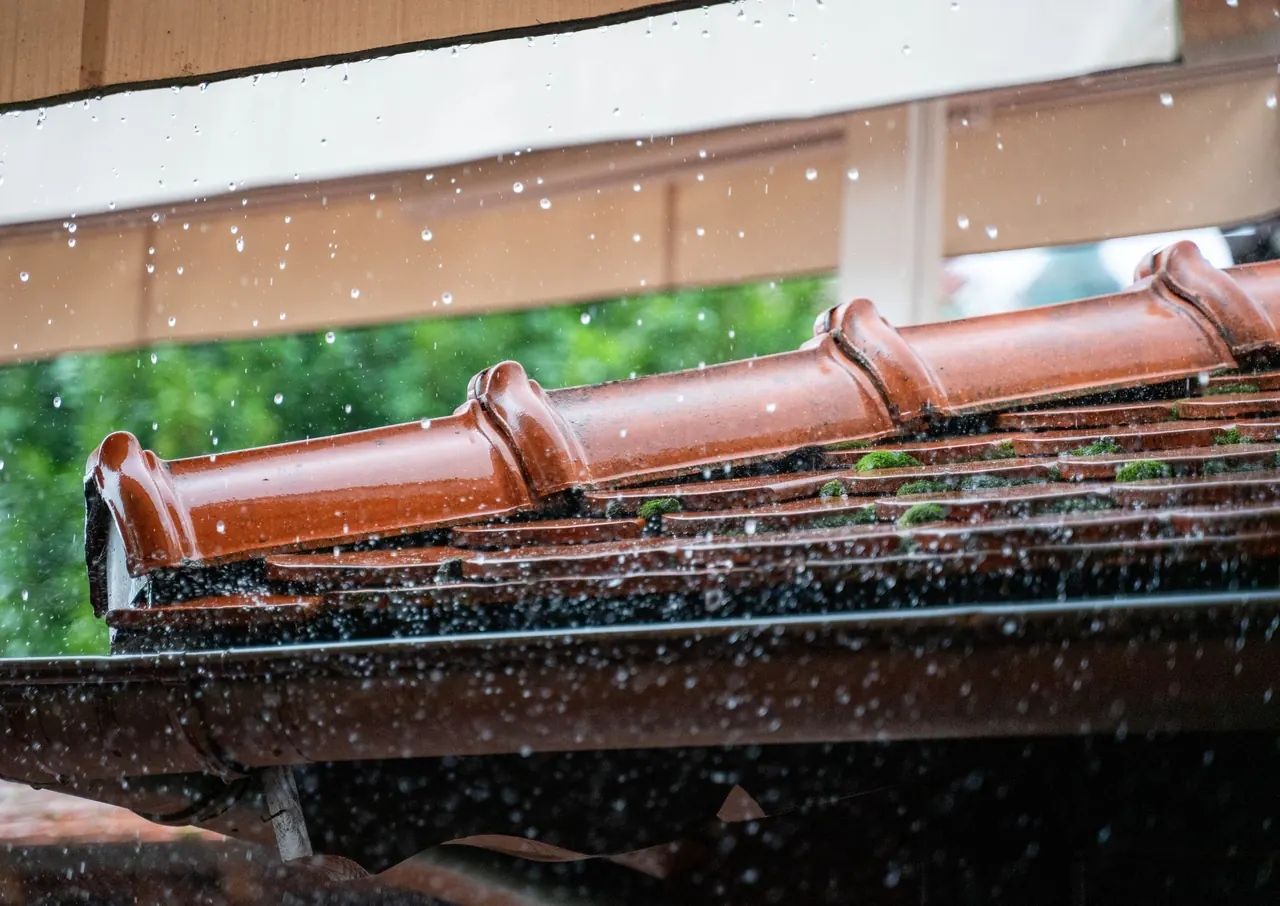
Old slate roofs add to it. When the nails under Welsh slate have corroded, a strong gust can lift several at once. Once the danger to people is dealt with, the aim is to stop water getting in:
- refixing or replacing slipped slates and cracked plain clay tiles
- rebedding a ridge that has started to lift, or securing a loose finial
- patching a split on a flat-roofed back extension
- covering an open section where a branch has gone through
Sometimes the permanent repair can be done on the same visit. In high wind or heavy rain we make the roof safe and come back once it is calmer. On a house in the Brockwell Park Conservation Area the permanent repair should be in natural slate or clay tile to match, even if the night-time fix is not. Afterwards, a roof inspection in Tulse Hill can check for damage that was not obvious in the dark, and our guide to spotting roof damage after a storm covers what you can check from the ground.
Insurers, freeholders and Lambeth
For storm or falling-branch damage on your own house, tell your insurer as soon as you can and keep photos from before and during the repair. Home policies commonly cover sudden storm damage but not gradual wear. If you live in a flat in a converted house, the roof usually belongs to the freeholder. If water is pouring in and the freeholder cannot be reached, stopping it comes first, and we can supply photos and a note of the work for the freeholder or managing agent. Lambeth tenants, including most households at Cressingham Gardens, should use the council's repairs line. The main emergency roof repair page explains the process in more detail.
Frequently asked questions
A slate has fallen onto the pavement near Tulse Hill station. What should I do?
Keep people away from the area under the roof and call us straight away. Where one slate has come down, others nearby are often close to following, so the roof needs checking even if it looks fine from below.
Will a night-time fix on my Trinity Rise villa match the slate?
Not always. The priority on the night is keeping water out. The permanent repair is then done in natural slate to match the rest of the roof.
Water is coming into my top-floor flat in a converted Tulse Hill villa. Is the roof my problem?
In most converted houses the roof belongs to the freeholder. Call us anyway if water is coming in, let the freeholder or agent know, and keep a record of what was done.





